Author Archive

Farmer Alert: Six Common Molecules Face Scrutiny in Kenya – What’s the Alternative?

Posted by

Kenya’s agricultural sector faces a critical challenge: only 10% of the country’s total land is arable, according to a 2017 government survey. This puts immense pressure on farmers to maximize yields from every available hectare, in a country where 30% of the GDP is contributed by agriculture. Still, pests and diseases threaten crop production at alarming levels, with losses ranging from 20% due to fungal diseases to as high as 90% from invasive species and scale insects.

In response, Kenya’s annual pesticide imports have been doubling since 2015. However, food security has not seen a commensurate improvement. The initial benefits of synthetic pesticides often give way to long-term risks: pest resistance, soil degradation, and potential nutritional decline in crops. What’s worse, an estimated 44% of the pesticides used in Kenya contain active ingredients already banned in the European Union due to health and environmental concerns, according to a damning report released in 2023.

Recognizing these risks, the Pest Control Products Board (PCPB) has launched a review of six widely used pesticides—remnants of the 1970’s Green Revolution era, marked by widespread adoption of synthetic pesticides and fertilizers to increase agricultural output.

The Chemicals Under Review—and Why

Acrinathrin
Usage: A synthetic pyrethroid insecticide used on potatoes, tomatoes, and beans for mite and aphid control. Concerns: Pyrethroids disrupt aquatic ecosystems and have been linked to neurological disorders in children, according to a 2018 study in the International Journal of Environmental Research and Public Health. Biological Alternatives: Natural predators (Phytotech, Montech, Amblytech),Entomopathogenic fungi, (Lecatech, Beauvitech).

Hexaconazole
Usage: A systemic fungicide for powdery mildew and rust in wheat, barley, and vegetables. Concerns: Flagged by the FAO in 2021 as a persistent organic pollutant with bioaccumulation risks. Biological Alternative: Beneficial bacteria (D-Press).

Propoxur
Usage: A carbamate insecticide for household pests such as mosquitoes and cockroaches, and agricultural use in coffee and vegetable farms. Concerns: WHO classifies it as moderately hazardous, with studies linking exposure to Parkinson’s disease and cognitive decline.

Diazinon
Usage: An organophosphate insecticide used in horticultural hotspots in Naivasha and Mount Kenya to control aphids, beetles, and caterpillars. Concerns: A 2019 KEPHIS report found that 40% of tested vegetables exceeded safe levels of organophosphate residues. In fact, the EU banned Diazinon in 2007 due to its neurotoxic effects. Biological Alternatives: Fungal biopesticides (Beauvitech), granuloviruses (Cryptogran), Entomopathogenic nematodes (Nematech H) and Plant extracts like Nemguard SC.

Methomyl
Usage: A carbamate insecticide for aphids, caterpillars, and flies in horticultural zones. Concerns: Highly toxic to bees and other pollinators, with increased cancer risks for farmworkers, according to a 2021 EPA study. Biological Alternatives: Entomopathogenic fungi (Beauvitech), soil-drenched nematodes (Nematech S).

Profenofos
Usage: An organophosphate insecticide used in cotton and vegetable crops in Makueni, Machakos, and coastal regions. Concerns: Linked to respiratory disorders, endocrine disruption, and water contamination—30% of samples in farming zones contained unsafe levels, per a 2022 NEMA report. Biological Alternatives: Predatory mites (Amblytech), beneficial nematodes (Nematech S, Nematech H), fungi (Beauvitech).

The Case for Biopesticides

Kenya is steadily transitioning to Integrated Pest Management (IPM), with biopesticides charging at the forefront. Adoption is particularly notable in export-driven farms in Naivasha, Thika, and Kericho, where meeting international standards is non-negotiable.

Biological control methods have proven successful before even outside the farm. In the 1990s, Lake Victoria faced a water hyacinth invasion that threatened fisheries and water transport. Scientists introduced two species of weevils—Neochetina bruchi and Neochetina eichhorniae—which slashed the hyacinth cover by 90%.

Unlike synthetic pesticides, biopesticides offer precise targeting, sparing beneficial insects like bees and ladybugs that are crucial for pollination and ecosystem health. They also decompose naturally, reducing soil and water contamination risks while mitigating pesticide resistance.

With the mounting evidence against harmful chemicals and the success of sustainable alternatives, Kenya stands at a crossroads. The future of its agriculture depends not just on higher yields, but on safer, long-term solutions that protect both farmers and ecosystems.

Kenya is Taking a Bold Stand Against Harmful Pesticides. What Does This Mean for You?

Posted by

Kenya’s agricultural sector remains a vital part of the economy, contributing 33% of the GDP and employing over 70% of the rural population. Recently, it has come under intense scrutiny due to the hazardous use of pesticides.

On August 6, 2024, Deputy Speaker of the National Assembly, Gladys Boss Shollei, highlighted that many of these pesticides, banned in Europe and the U.S., are still being sold to Kenyan farmers. This alarming situation is linked to rising cancer cases, prompting urgent regulatory reforms. In response, the Kenyan government has initiated the development of a national pesticide residue monitoring framework, which will soon be implemented.

What the Framework Entails:

The framework aims to ensure that agricultural products meet safety standards by controlling synthetic pesticide residues. It includes advanced testing facilities, regular monitoring protocols, and stringent penalties for non-compliance.

What It Means for Consumers:

Hazardous pesticide use is a serious concern. The Kenya Organic Agriculture Network (KOAN) reports that nearly 60% of fresh produce in Kenyan markets contains pesticide residues exceeding recommended levels. Deputy Speaker Shollei cited a University of Nairobi study that found 267 pesticides banned in Europe and America still in use in Kenya, including those linked to severe health risks like cancer. “These countries (pesticide producers) sell us cancer-causing pesticides, and then they sell us cancer drugs to treat our people,” Shollei lamented, underscoring the urgent need for the new framework.

Farmers’ Perspective: Navigating Regulations and Sustainability

Traditionally, Kenyan farmers have relied on synthetic fertilizers and pesticides to improve crop yields and protect against pests. However, the new framework’s strict regulations will necessitate a shift towards safer pest management practices. Integrated Pest Management (IPM), which combines biological, cultural, and chemical methods, offers a natural pivot toward healthier growing practices. The International Centre of Insect Physiology and Ecology (ICIPE) reports that areas championing IPM adoption have seen a 30% reduction in pesticide use. In line with this shift, biopesticides, which are recognized as less harmful to the environment, have seen a 15% increase in uptake over the past five years, now comprising about 10% of the pesticide market.

Putting Our Money Where Our Mouth Is:

Beyond health risks, unregulated pesticide use has far-reaching implications for Kenya’s environment and economy. Excessive pesticide use is linked to soil degradation, water contamination, and biodiversity loss. The new framework promotes sustainable agricultural practices and reduces reliance on harmful chemicals.

Economically, this initiative is crucial for Kenya’s agricultural export market. The European Union (EU) and other key markets have stringent pesticide residue limits, and non-compliance has led to the rejection of Kenyan horticultural products. KEPHIS estimates that 15% of Kenyan horticultural exports have been rejected by the EU in the last five years due to pesticide residue issues, resulting in significant financial losses. Ensuring compliance with international standards could boost Kenya’s export potential and drive economic growth.

Cultivating a Sustainable Future

The burden of implementing the new framework will fall squarely on Kenyan farmers. However, agricultural companies can support this transition by offering safer pest management practices that are both practical and effective. Bioline Agrosciences provides targeted products like entomopathogenic fungi, beneficial nematodes, hormones, plant extracts, and natural predators to protect against pests, enhance plant health, and improve soil quality. Regular training on Integrated Pest Management (IPM) practices ensures that farmers can successfully integrate these products into their everyday farming practices. By promoting long-term agricultural sustainability, Bioline Agrosciences is committed to enhancing the resilience and profitability of Kenya’s agricultural sector while protecting public health.

Dudutech Webinar: Understanding Nematodes for Practical Farmers

Posted by

Globally, nematodes cause US$125 billion in crop losses, making them the single most important pest to threaten food security. With over 4100 phytoparasitic nematode species threatening global crops and increasing pressure to reduce reliance on chemical controls, understanding and implementing effective and sustainable management is critical in 2023.

We have joined up with Ecospray and UK-based nematode control expert Dr Colin Fleming for a global webinar to empower our growers with useful and practical information on nematodes.

Topics:

  • Plant Parasitic Nematodes – biology, ecology and diversity
  • Signs and symptoms of PPN attack – Economic importance to farmers
  • How nematodes interact with plants
  • Nematodes as Biocontrols for pests
  • Biology, ecology and diversity
  • Integrated Management of Nematodes
  • Tools and methods for sustainable management of Nematodes

Watch the webinar recording here:

Get a 30% discount on Microbials – TRICHOTECH, MYTECH, BEAUVITECH, LECATECH and NEMATECH S

Posted by

Using beneficial nematodes and fungi as biocontrols allows growers to easily defend their crops on a microscopic level, helping improve plant and soil health, as well as promoting the health and safety of end customers and farmers alike.

Crop roots are vulnerable to attack by a variety of insect pests and fungal diseases which co-habit the root zone or live on their folaige. Integrating our microbial range into a crop protection programme allows growers to defend their plants with naturally occurring beneficial fungi and nematode colonies. Healthier roots and leaves allow nutrients to flow more readily, boosting plant growth and ultimately their yield.

About BEAUVITECH WP

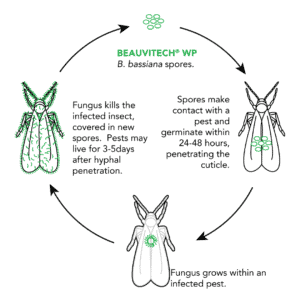
BEAUVITECH® WP is a biological insecticide containing Beauveria bassiana, a natural insect-killing fungus used to sustainably manage soft-bodied insects such as Thrips and Whitefly. BEAUVITECH® WP spores germinate on their target host, over time killing it before emerging and releasing spores to begin their lifecycle again – this infection is also called White Muscardine disease.

Fig. 1. BEAUVITECH® WP mode of action.

Read more about BEAUVITECH® WP.

About LECATECH WP

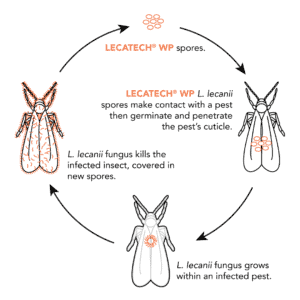
LECATECH® WP is a biological insecticide containing Lecanicillum lecanii, a natural insect-killing fungus used to sustainably manage soft-bodied insects such as Thrips and Whitefly. LECATECH® WP spores germinate on their target host, over time killing it before emerging and releasing spores to begin their lifecycle again.


Fig. 1. LECATECH® WP mode of action.

Read more about LECATECH® WP.

About MYTECH WP

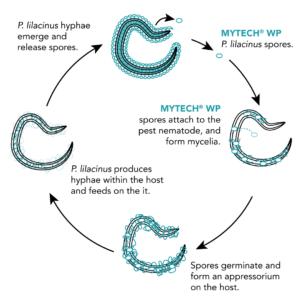
MYTECH® WP is a biological nematicide containing Paecilomyces lilacinus (F18), a naturally occurring nematode killing-fungus used to sustainably manage plant parasitic nematodes (PPNs) including Root knot, Cyst, Root lesion, Burrowing and Reniform amongst others. MYTECH® WP parasitizes and subsequently kills all life stages of target PPNs.

Fig. 1. MYTECH® WP mode of action.

Read more about MYTECH® WP.

About TRICHOTECH WP

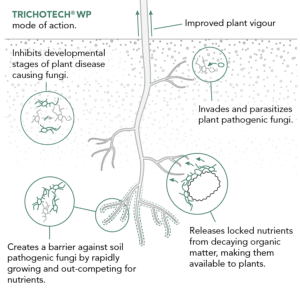
TRICHOTECH ® WP contains Trichoderma asperellum a soil-dwelling fungi used to defend crops against disease-causing fungi Fusarium spp., Pythium spp., Rhizoctonia spp. and Sclerotinia spp. TRICHOTECH ® WP also aids in releasing nutrients stored in organic matter and boosts plant development.

Fig. 2. TRICHOTECH® WP mode of action.

Read more about TRICHOTECH® WP.

About NEMATECH S SP

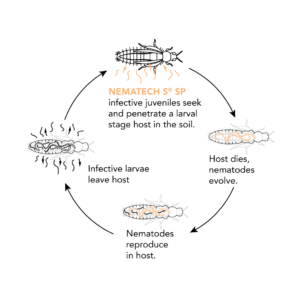
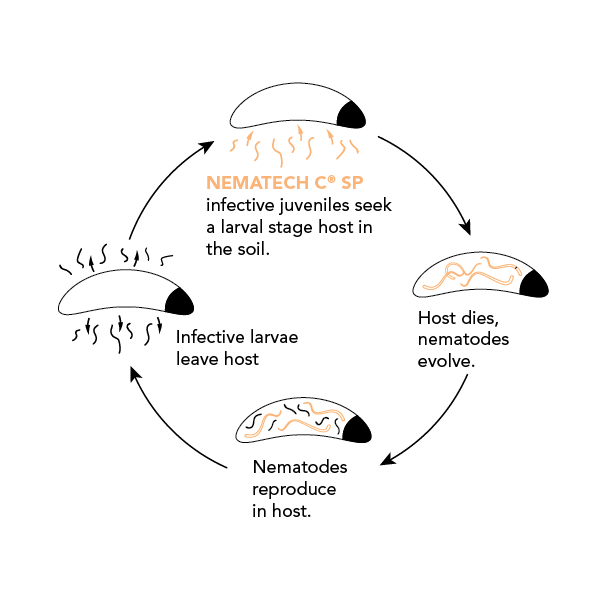
NEMATECH S ® SP contains infective juvenile stages of Steinernema feltiae, a beneficial nematode used to defend crop roots against Thrips and Whitefly by attacking their soil-dwelling pupal stages. The nematodes in NEMATECH S ® SP actively seek out pupal Thrips and Whitefly in the soil to infect and complete their reproduction cycle, killing the target before multiplying and emerging to find a new host.


Fig. 2. NEMATECH S SP® WP mode of action.

Read more about NEMATECH S® SP.

Offer valid only in Ethiopia, Kenya, Tanzania and Uganda until 15 April 2023.

Enquire now

Complete the form below.

Submit your details and our team will reach out to complete your order.


*Registration and availability may vary by region. Contact your local supplier or info@dudutech.com for more information.

Boost your soil health with TRICHOTECH WP and MYTECH WP

Posted by

Sustainably defend crops against plant-killing fungi and nematodes.

Crop roots are vulnerable to attack by a variety of parasitic nematodes and fungal diseases which co-habit their soil. Growers who use MYTECH® WP and TRICHOTECH® WP on their crops defend their roots with naturally occurring beneficial fungi colonies and boost their soil and plant health.

Integrating MYTECH® WP and TRICHOTECH ® WP treatments allows growers to simultaneously defend crops against plant parasitic nematodes and common soil-borne fungal challenges, while boosting root growth and development, allowing more nutrients to make their way up the plant.

About MYTECH WP

MYTECH® WP is a biological nematicide containing Paecilomyces lilacinus (F18), a naturally occurring nematode killing-fungus used to sustainably manage plant parasitic nematodes (PPNs) including Root knot, Cyst, Root lesion, Burrowing and Reniform amongst others. MYTECH® WP parasitizes and subsequently kills all life stages of target PPNs.

Fig. 1. MYTECH® WP mode of action.

Read more about MYTECH® WP.

About TRICHOTECH WP

TRICHOTECH ® WP contains Trichoderma asperellum a soil-dwelling fungi used to defend crops against disease-causing fungi Fusarium spp., Pythium spp., Rhizoctonia spp. and Sclerotinia spp. TRICHOTECH ® WP also aids in releasing nutrients stored in organic matter and boosts plant development.

Fig. 2. TRICHOTECH® WP mode of action.

Read more about TRICHOTECH® WP.

Enquire now

Complete the form below.

Submit your details and our team will reach out to complete your order.


*Registration and availability may vary by region. Contact your local supplier or info@dudutech.com for more information.

Understanding nematodes could unlock the potential of your farm.

Posted by

A key to unlocking the potential of a crop is buried in the upper layers of the soil. Living within soil water pockets are worm-like micro-organisms called nematodes (phylum Nematoda). These tiny creatures amass large populations and in agriculture, they can help or hinder. Some nematodes are plant-parasitic (or PPNs for short), causing over $100 billion in crop damage annually, while others are beneficial, holding enormous potential for sustainable crop protection or helping make nutrients more readily available to plants.

By Cory Smit and Catherine Gacheri

Nematodes are some of the most abundant animals on Earth. Nematology, the study of nematodes, is vast, having identified over 28 thousand species to date, many with feeding habits which are important in agriculture. Fortunately, there are a few fundamentals that farmers can use to simplify and act on the information.

  1. Some nematodes are crop pests, feeding on or infecting roots, bulbs or leaves. The image above is a typical example of a Root-Knot Nematode or Meloidogyne spp. infection of roots. (Photo: Scot Nelson, 2017. Meloidogyne incognita on Solanum lycopersicum.).
  2. Some nematodes are beneficial in killing crop pests and while others help unlock nutrients.
  3. Routinely monitor nematodes in all growing areas using professional nematode analysis, and deploy the recommendations.
  4. Nematodes reproduce quickly and in massive numbers – good news if they are beneficial, bad news if they are pests.


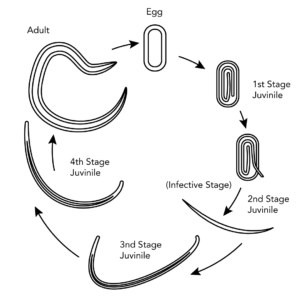
Fig. 1. Typical nematode lifecycle. Duration depends on species and other factors.

Do nematodes speed up the release of nutrients?

The interplay between bacteria, fungi and beneficial nematodes that feed on them can contribute to the supply of nitrogen and accelerate the mineralization of untapped organic nutrients. By consuming the bacteria and fungi which break down compost within the soil, these nematodes can speed up the release of nitrogen into the soil by releasing excess nutrients, making it available for crops to use.

Tip: Growers can stimulate this process by incorporating manure and compost into the soil to provide a habitat for bacterial and fungal colonies to grow in, making new food for the beneficial nematodes 

Can nematodes be used as Biocontrols?

Dudutech’s research and development of nematodes as biocontrols take advantage of species which kill crop pests, called Entomopathogenic Nematodes (EPNs). EPNs find and kill their target pest to use in their reproductive cycle. Using EPNs helps growers reduce their reliance on chemicals which may unintentionally harm the soil ecology and non-target beneficial micro-organisms.

Using research on their host range, Dudutech developed four nematode-based products to tackle key pests. These include:

  • NEMATECH® S – Steinernema feltiae D2 – for Thrips and Sciarid Flies,
  • NEMATECH C – Steinernema carpocapsae – for Cutworm,
  • NEMATECH HHeterorhabditis bacteriophora F27 – for beetles,
  • SLUGTECHPhasmarhabditis hermaphrodita M1 – for slugs and snails.

The ability of infective juveniles to quickly seek out and kill their target before spreading to new hosts makes these beneficial nematodes powerful agricultural tools for the sustainable management of a wide variety of crop pests. In particular, nematodes are widely used in integrated pest management of Thrips.


Fig. 3. Nematech S SP mode of action.

Due to their complex lifecycles, no single control option can provide satisfactory control of Thrips. If any part of their lifecycle is left unmanaged, the populations can become “resident” and quickly boom, causing significant damage to crops.

In most cases, Thrips infestations in greenhouse crops are from resident populations.
Most thrips species including Western Flower Thrips (WFT, Frankliniella occidentalis) spend up to one-third of their lifecycle in the soil. When used with above-ground predators, such as AMBLYTECH and MONTECH, and traps (STICKTECH), the nematodes in NEMATECH® S play an important role underground in the biocontrol strategy by killing Thrips in their soil-living stages.

How can farmers sustainably manage plant-parasitic nematodes (PPNs)?

PPNs are crop pests, causing lesions, cysts and rot in the root system. Blue, yellow and red (Toxicity Classes 3 through 1 a and b) chemical nematicides pose numerous problems with far-reaching effects for growers and consumers including the development of nematicide resistance, exceeding residue limits (MRLs) and negative effects on non-target organisms. These issues have far-reaching effects for farmers as they make pesticide applications more expensive, restrict access to markets and harm beneficial nematodes living alongside pest nematodes.

To help growers tackle these nematodes in a sustainable way, Dudutech has paired MYTECH® and NEMguard. MYTECH® contains a powerful nematophagous fungus (Paecilomyces lilacinus) which selectively targets plant-parasitic nematodes. Mytech kills all life stages of most plant-parasitic nematodes. The fungal spores on treated crops attach to their target and form mycelia on the host, feeding on it before releasing spores to begin the cycle over.


Fig. 4. Mytech mode of action.

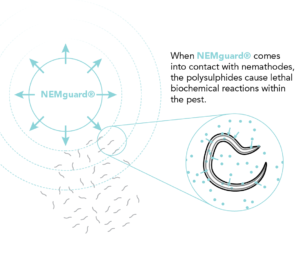
NEMguard® is a powerful environmentally intelligent nematicide containing plant-sourced ingredients which can be used to control PPNs. The (proprietary) polysulphides contained in NEMguard rapidly cause oxidative stress and kills PPNs. Due to their biology, beneficial nematodes are less affected by NEMguard when compared to routinely used broad spectrum nematicides which may damage the environment.


Fig. 5. NEMguard SC mode of action.

The soil beneath crops is a complex but delicate ecosystem. By looking after it sustainably, growers can take advantage of the plant health benefits afforded by healthy soils.

Interested in finding out more?

Click here to send us a message or use our chat channel on our website.

Get ahead of Thrips and Whitefly using our range of EPFs!

Posted by

Buy LECATECH® WP or BEAUVITECH® WP and get a 5% discount.*

Thrips and whiteflies can be a major challenge to growers as their numbers can quickly balloon, causing significant crop losses in their wake. By using LECATECH® WP and BEAUVITECH® WP, growers can sustainably manage these pests without negatively impacting the environment, people and other non-target organisms.

LECATECH® WP and BEAUVITECH® WP are easy-to-use bio-insecticides containing specialised fungi that kill target pests on crops. Using these products together allows growers to target a wide range of crop pests with different modes of action.

About BEAUVITECH WP

BEAUVITECH® WP is a biological insecticide containing Beauveria bassiana used to manage Thrips, whiteflies and other soft-bodied insects. B. bassiana is an insect-killing or entomopathogenic fungus (EPF) that causes white-muscardine disease in target pests. When BEAUVITECH® WP spores come into contact with their target host with relative humidity >70% and temperatures between 18 – 30°C, their mode of action begins.

Fig. 1. BEAUVITECH® WP mode of action.

Read more about BEAUVITECH® WP.

About LECATECH WP

LECATECH® WP is a biological insecticide containing Lecanicillium lecanii, a naturally occurring Entomopathogenic fungus (EPF) used for sustainable, residue-free management of Whiteflies. When LECATECH® WP spores come into contact with their target host with relative humidity >70% and temperatures between 18 – 30°C, their mode of action begins.

Fig. 1. LECATECH® WP mode of action.

Read more about LECATECH® WP.

Enquire now using the form below.


*Registration and availability may vary by region. Offer only valid until 31 August 2022. Contact your local supplier or info@dudutech.com for more information.

Craig Oulton completed the Lewa Marathon, barefoot!

Posted by

By Cory Smit – Dudutech

In an inspirational feat of endurance, Craig Oulton (former Dudutech board member), completed the full 42.2km Lewa Safari Marathon ‘22 barefoot in just under 5 hours. Craig said he took on the barefoot challenge to raise funds for “Sports4Change, a wholly Kenyan charity organization that sponsors the education of orphans and other bright and deserving students in Kenya.”

Competing in the Lewa Safari Marathon is a must-do experience for runners around the world. The race takes place on an undulating course through northern Kenya’s majestic Lewa Conservancy, with endless landscapes and spectating wildlife. However, as marathons go, Lewa is considered one of the most difficult in the world.

Craig Oulton before his barefoot marathon attempt.

According to Craig, who has completed it 7 times and 3 barefoot, the marathon has its own particular set of challenges. The Northern Kenyan environment is inherently a tough place to run – the hot dry weather, high altitude, rough terrain and wildlife dangers are major challenges for participants, let alone anyone without trainers.

“My main concern was breaking toes, which I did on my last attempt…” Craig said, “thorns are also an enemy which forces you to be very aware of your footfalls barefoot. The biggest issue is how hot the ground gets, it literally burns your feet.”

As an experienced runner who regularly participates in full and ultra marathons, Craig said exhaustion and fatigue are expected. “I was not worried as I have run marathons before”, he said, “and I know what my brain and body are telling me… I generally ignore this and keep going.”

Craig running on the hot ground in Lewa.

“Training is so critical if you don’t do the mileage you won’t finish on the day,” he stated, adding that the practice strengthens his feet, ankles and pads. Without proper training, Craig risks serious injury.

One of the particular joys of running the Lewa Safari Marathon is experiencing the wildlife on foot. “It was amazing. As soon as we set off, we had three rhinos 2 km out. Lots of buffalo and plains game. Later in the run, about 3 hours in, we had a huge herd of elephants in the marsh. The spotter planes, a helicopter and rangers, both in cars and on foot, did a brilliant job of keeping us safe.”

Craig dedicated this barefoot marathon to raising funds for Sports4Change, a Kenyan charitable organisation which helps provide bright and deserving kids access to good education. By rallying Dudutech and other donors Craig raised Ksh500,000 for Sports4Change.

To find out more about Sports4Change and Craig’s barefoot marathon, go to https://www.sports4change.org/cause/school-fee-fund/. Donations are still open, please consider supporting this inspirational cause. Watch the Sports4Change video made for Craig!

Construction of new canteen and office buildings take shape at Ladybird farm

Posted by

Ladybird farm is buzzing as the new canteen and office building sites become vertical. The new canteen and office buildings are part of a project to centralise daily life at Dudutech.

Dudutech (2022). 3D Render: A sneak peek at the Canteen interior.

Dudutech (2022). 3D Render: new office exterior.

The office building will be home to operations, finance, commercial, HR and specialist services under its 720m² roof.

The canteen features a galley kitchen, cold store and seating for 150 spaced 1.5m apart under COVID-19 H&S rules. The buildings will bring the team closer together, driving our culture of team-spirit further.

Steinernema carpocapsae production underway at Dudutech’s biorational labs

Posted by

S. carpocapsae is a powerful novel entomopathogenic nematode already in use in Europe and the US, and our production capabilities have helped create additional availability.

Cutworms (Agrotis spp.) and leatherjackets (Tipula spp.) are larval stage pests that damage vegetable, cereal and root crops by biting and feeding on the plant stems and leaves. To combat these pests, Dudutech has begun production and R&D of Steinernema carpocapsae a deadly pest-parasitic nematode that targets Agrotis spp. and Tipula spp. to complete their lifecycle.

Fig. 1. Typical S. carpocapsae lifecycle.

Watch this space for more news and information on “Nematech C” development.

Catherine Gacheri prepares for a new role as Regional Technical Manager 

Posted by

As Catherine Gacheri prepares for her new role as “Regional Technical Manager”, we reflect on her history in IPM at Dudutech.


During her 21 year tenure at Dudutech, Catherine Gacheri has blazed a trail for IPM in Kenya and now Africa. Having worked in every part of Dudutech, Catherine is uniquely positioned – with a deep understanding of every step of the IPM product journey from R&D to in-field technical support. In 2022, Catherine will also take up an exciting new role as Regional Technical Manager. 

As Dudutech expands further into new markets, the new position was created to provide customers with enhanced technical support and new product development. Catherine said, “the position offers an opportunity for career and personal growth.” As Regional Technical Manager, Catherine will also work closely with R&D, marketing and training to help farmers access information and advice. 


Catherine’s track record as an IPM champion 

Catherine joined Dudutech as a Field Trials Officer in 2001 after graduating from University of Nairobi with an BSc in Agriculture, although her first experience with biologicals came from ICRISAT (International Crops Research Institute for the Semi-Arid Tropics) where she worked with natural enemies for pest control. Starting with a research role, Catherine conducted some of Africa’s earliest field trials using these biotech solutions.  

In one story Catherine told in an interview, she recalled isolating a natural enemy for aphids from her mother’s garden. In another, she spoke about her contribution to academia through her paper on what is now known as hotspot treatment that led to a new strategy that reduces the cost of natural enemy applications. (Read about the research here).

By 2002, Catherine’s role evolved into production management for the outdoor insectaries. This experience provided insight into how the mites and parasitoids behave and what makes them thrive. It also primed Catherine for the next 16 years of her career providing technical support to internal, external and international growers across Africa. 

According to Catherine, the early to mid-2000s was an adoption phase for the IPM industry. “At that time, biological pest controls were a new concept to growers in Kenya. There was little information available,” she recalled. “The landscape was very much chemical focussed so we had to prove that it works.” 

This challenge allowed Catherine the opportunity to develop close long-term relationships with the growers and share knowledge about IPM. “Despite the early hurdles, the farmers quickly realised the value of using biologicals and widespread adoption began among the commercial/export farmers,” Catherine commented. 

As exportation began to Zimbabwe and South Africa, Catherine’s deep expertise was leveraged in the new markets and her role officially became “Field Technical Support East & Southern Africa.” Using the experiences gained in Kenya, Catherine was equipped to help growers transition to IPM. Her work in the region helped cement Dudutech’s position as a leading IPM supplier in Africa. 

After 7 years in this role, she was promoted to Kenya Technical Sales Manager, bringing her closer to her family. Her existing experience and decades-long relationships with Kenyan growers meant Catherine was the best choice to drive sales in Kenya. 

During her career, Catherine has invested in personal development and continued her education, attaining a MSc in Agricultural Entomology and a PG Cert. in sales and marketing from the University of Cape Town. 

Zimbabwe’s Forrester Estate team and Phil Weller tour Ladybird Farm

Posted by

Forging strong relationships
In mid-January 2022, Dudutech hosted Phil Weller from Dudutech Zimbabwe and his customers, Chris and Ferdinand from Forrester Estate for a tour of Ladybird Farm in Naivasha, Kenya.

The trip aimed to provide a deeper understanding of the products and capabilities directly to the farmers. The group took part in a special guided backstage tour of Dudutech’s state-of-the-art facility including the outdoor and indoor insectaries, fungal and nematode production and quality control facilities.

Phil has been working with the Forrester Estate team for over 6 years to deliver sustainable crop protection to their 2,300 Ha of crops including peas, tobacco, blueberries, cereals, grasses and citrus.

“Our Dudutech trip was an eye-opener,” said Ferdinand (Forrester Estate), “it is truly amazing what growth the Dudutech team achieved with their vision, driven research and bold management. Ecological sustainability is the foundation of economic sustainability… There is much more we need to do: IPM, compost, worm farming, activated charcoal, green manure and crop rotation.”

To learn more about Dudutech in Zimbabwe, contact Phil:

Phil Weller
Zimbabwe Authorised Reseller
phil.weller@dudutech.com

New Senior Technical Lead Appointed to UG and TZ

Posted by

To support our growers in the rest of East Africa, Dudutech has appointed Festus Kilee as Senior Technical Lead, Tanzania and Uganda. Festus will drive engagement with customers and allow Dudutech to better serve them.

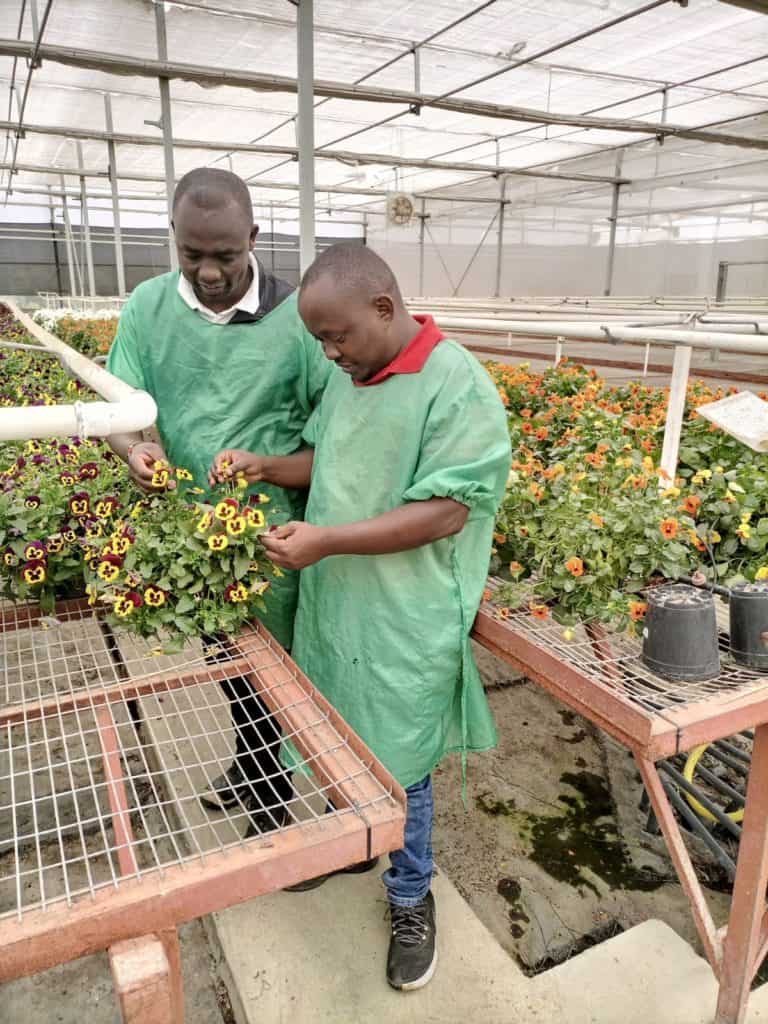
Festus Kilee and Livingstone Chepukel (Dudutech Senior Technical Leads) inspecting plants at Korfovouni, Tanzania.

Festus brings considerable experience to his new role having spent 3 years in Ethiopia serving Sher Afriflora, the world’s biggest flower farm, after working in IPM for cut flowers and vegetables in Kenya. 

He will regularly visit Tanzania and Uganda to ensure continuous engagement with growers, whose main focus areas are cut flowers, avocados, and macadamias. Commenting on pests and diseases, Festus said, “Avocado’s major challenges in Tanzania are: Phytophthora root-rot, Damping-off disease, False codling moth (FCM), Fruitflies, Vine weevils. Major pests for cut flowers in the area are Thrips and spider mites.” 

To help tackle these challenges, Dudutech has registered a range of products in each country. Looking at the novel challenges, Festus said, “we are making every possible effort to ensure more products are registered in these regions for a wider range of solutions to the growers.” 

Tanzania: 

  • PHYTOTECH – predatory mites for RSM 
  • BEAUVITECH – Insect-killing fungi for Thrips and Whiteflies 
  • MYTECH – Nematode-killing fungi for Plant Parasitic Nematodes 
  • LECATECH – Insect-killing fungi for Thrips and Whiteflies 
  • TRICHOTECH – Beneficial soil fungus for soil health 

Uganda: 

  • PHYTOTECH – predatory mites for RSM
  • MYTECH – Nematode-killing fungi for Plant Parasitic Nematodes 
  • TRICHOTECH – Beneficial soil fungus for soil health

According to Festus, “there is no doubt IPM is the future in farming, the growers are eager to know which solutions we can offer in a cost-effective and sustainable way.” He went on to say, the agricultural landscape in Tanzania and Uganda are very similar to Kenya, with growers open to new technologies.” 

Protecting our team through COVID-19 vaccination

Posted by

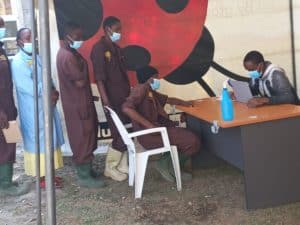
Dudutech team members registering the first shot of their COVID-19 vaccination.

As a part of our ongoing commitment to our team’s health and safety and joining the global drive to eliminate COVID-19, Dudutech is rolling out a vaccination program to the entire team. According to Benjamin Desruelle, Dudutech’s COO, the program which started on 16 April 2021 is “targeting a 100% vaccination rate for the first shot in December 2021.”

Wilson Wainaina, Dudutech’s HR manager, said “we have a reduced risk of our employees getting infected with Covid -19. As vaccination rates rise within the company, it is less likely people are to experience stress or skip health care appointments – which means happier and more productive employees.”

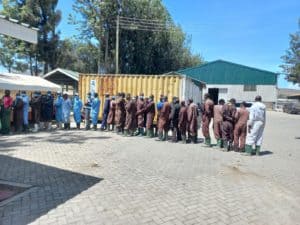
Dudutech team members queuing to receive the first shot of the COVID-19 vaccine at Ladybird Farm, Naivasha.

The vaccination program is aimed at helping further protect the health and wellbeing of our team. By working closely with all departments, the program has so far reached 85% of team members with the first dose, totalling 302.

The welfare committee was used to raise awareness by engaging directly with the participants. Although, Wilson said “religious beliefs and underlying medical conditions” were major challenges to the program.

Training for end-to-end QC protocols in Ethiopia a success

Posted by

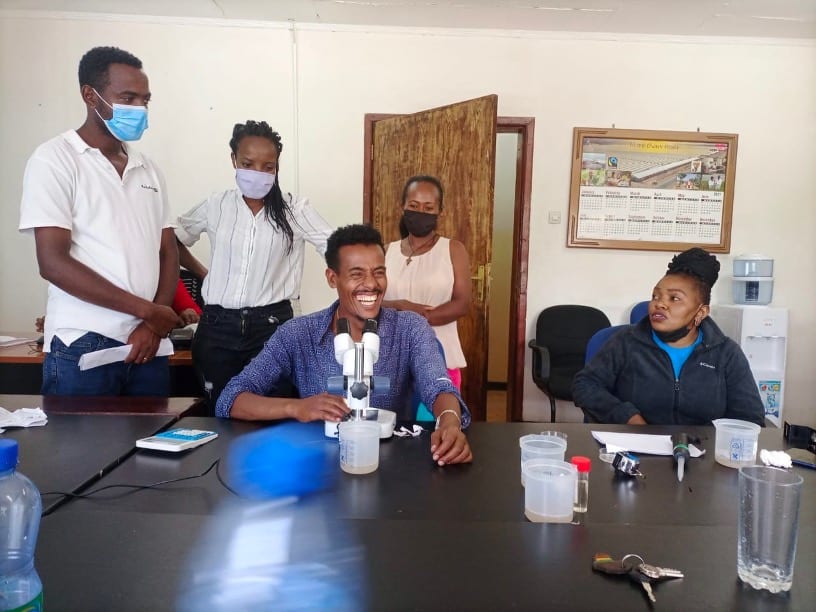
The QC team during the training at Sher Afriflora, Ethiopia.

Building knowledge and understanding through QC training

Earlier this year, Constance Muholo, Dudutech Macrobial QC Manager, and the quality team from Dudutech went to Sher Afriflora’s 490Ha rose farm located at Ziway, Ethiopia to set up a QC bench at their facility. The project aimed at building customer-side knowledge and understanding, and provides end-to-end QC protocols and a team of trained technicians familiar with the process. This enables Sher to assess the condition of the mites they receive rapidly and confidently.

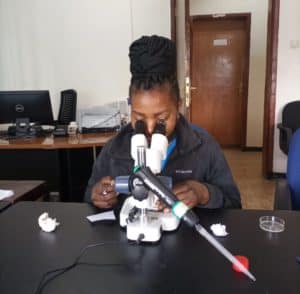
Constance Muholo, Dudutech Macro QC Manager, inspecting a sample under a microscope during the training session.

The effect of establishing the QC bench was almost immediately realised. The team were better able to correctly distinguish the mites within the bottles and so raised fewer queries. John Ogechah, Export Manager, said, “feedback from the customer has been positive so far.”


Phil Weller Nominated to sit on Biopesticide Advisory Board

Posted by

Phil Weller from Dudutech Zimbabwe has been nominated to represent the private sector on the Biopesticides Project Advisory Board by the International Centre for Genetic Engineering and Biotechnology (ICGEB).

The board is made up of experts from the industry, research and academia, regulators and farmer bodies, and will collaborate and consult on “Enhancing Trade Through Regulatory Harmonisation and Biopesticide Based Residue Mitigation in the SADC Region.” As the name implies, the project seeks to improve the agricultural trade position for the block (which includes Tanzania, DRC, Mozambique, Malawi, Angola, Zambia, Zimbabwe, Botswana, South Africa, eSwatini – formerly Swaziland – and Lesotho) by reducing pesticide residue levels through the adoption of biocontrols in agriculture.

Many major horticulture importing markets, such as the EU and US, have strict MRL (Maximum Residue Limit) regulations on the acceptable levels of pesticide residue on imported food and flowers. Globally, growers who wish to enter these markets often adopt IPM and biocontrols from Dudutech in their pest management programmes to work around MRL restrictions.

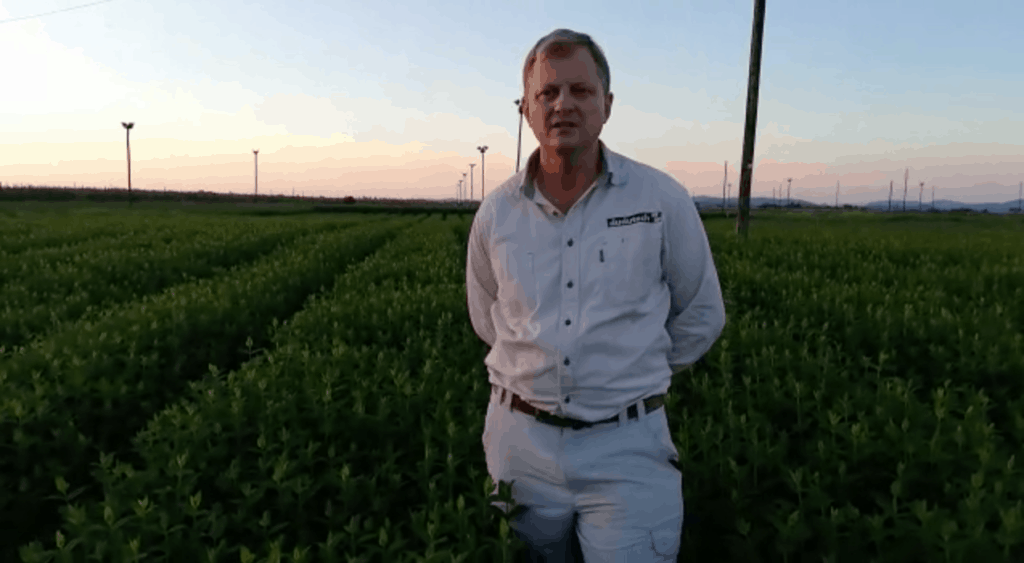
Phil Weller in a flower field outside Harare, Zimbabwe.

On being nominated, Phil said, “it is a great honour to be asked to play a part in such an important project.” With a member of the Dudutech team representing the private sector, we have a unique opportunity to help growers adopt IPM and mitigate residues on their farms.

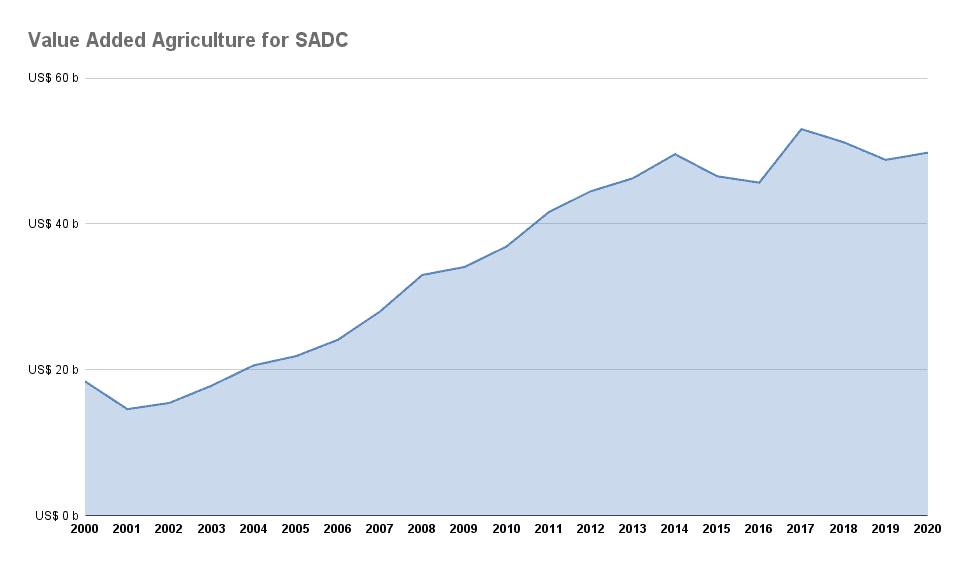
Graph: Value Added Agriculture for SADC in US$.

According to World Bank data, since 2000, the combined value-added agriculture in the SADC region has more than doubled, from US$18 billion to around US$45 billion. Although production capabilities are in place, accessing high-value markets is a key to transforming the value of ag produce exported. By looking to other African countries which have had some success in enhancing their trade partly through the use of biologicals, such as Kenya, growers are able to see the value in adopting this new technology. For example, the same World Bank data for Kenya shows this metric balloon 10 times over from 2000 to 2020, reaching US$34.7 billion, nearly three-quarters of the value-added agriculture for the entire SADC region.

Contact us to find out more about how IPM can help you manage MRL challenges:

Contact Form

Sources: World Bank Data, (2021): https://data.worldbank.org/indicator/NV.AGR.TOTL.CD?end=2020&locations=ZW-TZ-ZA-ZM-NA-SZ-LS-MW-AO-CD-MZ-KE&start=2000&view=chart

Trichotech WP now approved in Ethiopia

Posted by

Dudutech’s Ethiopia team are excited to announce that TRICHOTECH WP has been approved for importation and use in Ethiopia, giving growers a powerful new tool for preventing diseases caused by Fusarium spp. and promoting good soil health. Our team have been working closely with local authorities to bring TRICHOTECH WP to market for Ethiopian growers.

TRICHOTECH WP has been an integral part of Dudutech’s IPM portfolio since 2002 and is helping farmers in Africa (Kenya, Tanzania, Zimbabwe, South Africa and now Ethiopia, with more on the way) combat plant disease without harming beneficial organisms, farmworkers or the environment.

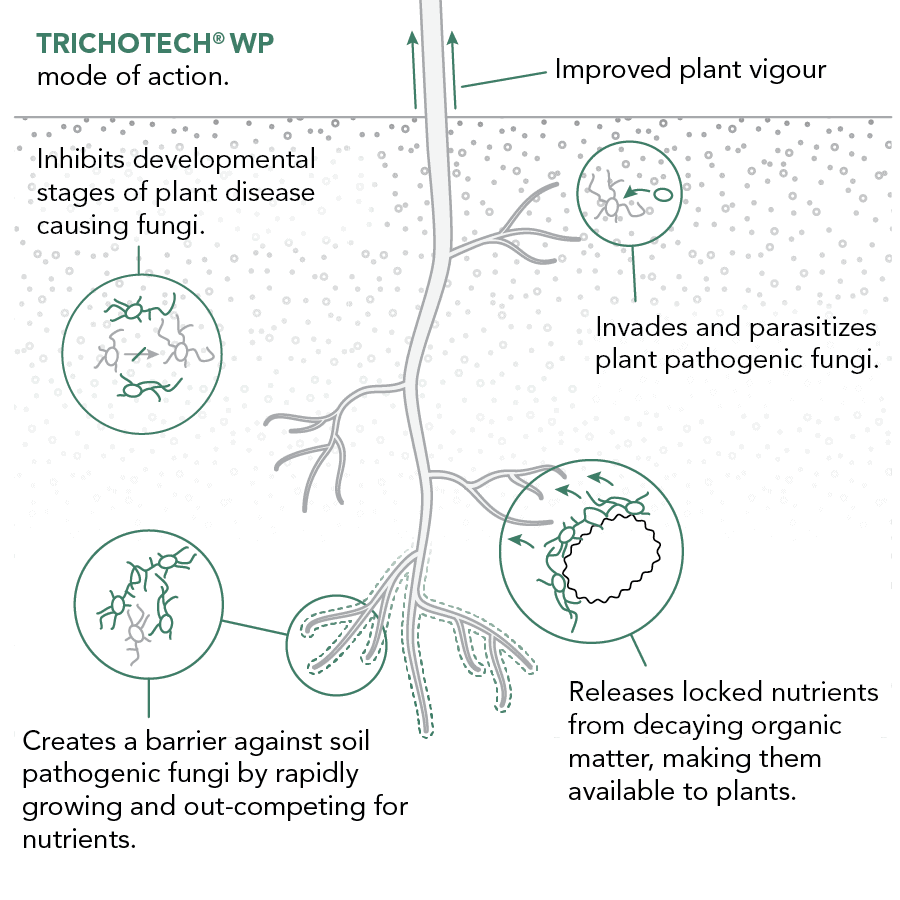
TRICHOTECH WP mode of action.

T. asperellum is a powerful naturally occurring beneficial soil fungus used to manage diseases caused by Fusarium spp. and to promote plant growth. Each gram of TRICHOTECH WP contains 4 billion Trichoderma asperellum spores or Colony Forming Units (CFUs) mixed in an inert carrier. Once drenched on the crop, the spores germinate and the fungus grows, defending the roots and releasing nutrients locked in undecayed organic matter. By using TRICHOTECH WP, growers can sustainably manage crop disease, improve soil health and improve the health and vigour of the plant while using fewer chemicals.

Advantages of TRICHOTECH WP:

  • Protects and promotes good soil health
  • No resistance development
  • No harmful residues
  • No MRLs
  • 0 PHI and 0 REI

Contact

Ismael Yassin
Dudutech Ethiopia

Ismael.Yassin@dudutech.com

+251 93 039 2276


Karibu Benjamin, Dudutech’s new COO

Posted by

FAO: Dudutech Website
REF: Benjamin Desruelle appointment.
DOI: 25/03/21

Dear All,
It is with great pleasure that I announce that Benjamin Desruelle will be joining Dudutech in the role of Chief Operating Officer – Dudutech Integrated Pest Management Ltd. Benjamin will be a member of the Dudutech Board of Directors and will be reporting to me as Managing Director, Dudutech Integrated Pest Management Ltd. All other reporting structures will remain as they are.

Benjamin has worked for Invivo Group for over seven years: His first secondment was from 2012 to 2014 within the Animal Health & Nutrition division as Operation Controller in Mexico, following this period Benjamin worked 3 years’ experience as Head of Finance at Covama. He returned to the Invivo group in 2018 as International Finance Controller for Bioline Agrosciences, the Integrated Pest Management division of Invivo, based in Paris.

At Bioline Agrosciences Benjamin has been involved in several projects, including, the creation of a subsidiary in Spain (Bioline Iberia) Implementation of new Financial Systems in France, the UK, the US & Spain, in addition, Benjamin has supported a number of major investment projects such as the construction of bio-factories in Spain and in the US. Benjamin speaks four languages – including French, Spanish, English and Portuguese.

“We are very enthusiastic to start this new life on the shores of Lake Naivasha & I particularly look forward to starting working with all of you”.

Benjamin Desruelle, Dudutech COO

Benjamin will be stationed with his family in Naivasha, Kenya. We hope they will enjoy their new neighbours – among them giraffe, zebra and other wildlife.

To find out more about his career and background, go to his Linkedin profile.

Tom Mason,
Managing Director,
Dudutech Integrated Pest Management Ltd

Dudutech acquired by Bioline Agrosciences (Invivo Group), Press Release

Posted by

_____________________________________________ 

FAO:    Press Release

REF:    Dudutech acquired by Bioline Agrosciences (Invivo Group)

DOI:     Tuesday, February 23, 2021


*Start*

Dudutech, a division of Flamingo Group International, announces that they have been acquired by Bioline Agrosciences, a subsidiary of InVivo Group. By joining up with Bioline Agrosciences (InVivo), Dudutech becomes part of a world-class IPM provider, with over 40 years of experience in the manufacturing and distribution of biologicals.

Established in 2001, Dudutech is Africa’s leader in Integrated Pest Management (IPM) with a wealth of experience in designing and delivering biological pest control solutions. With its new biofactory in Kenya Bioline Agrosciences owns now 8 production sites in the world (Europe/ North America and Africa).

Tom Mason, Managing Director of Dudutech said, “this acquisition is a unique chance for us to affirm our leading position in Africa, combining our technologies with the well-known brand and the extensive experience of Bioline Agrosciences. We look forward to working with the global Bioline team to enhance our service and product offering and to contribute to a future with sustainable, secure and safe agriculture.”


Commenting on the repositioning of Dudutech, Giles Turrell, CEO of the Flamingo Group, said: “Flamingo, with its substantial Growing operations in Kenya and Ethiopia, will continue to use Integrated Crop Management solutions as a production strategy. Therefore, it made sense for us to select Bioline Agrosciences as the future owner of Dudutech and preferred supplier. Our leading position in technology with a strong commitment to sustainable farming will ensure premium quality and innovative biocontrol solutions are widely available for our Group.”

Laurent Martel, CEO of Bioline Group, said “This new site in Kenya will be the spearhead of our expansion in Africa to promote new environmental-friendly technologies in agriculture.”

According to Thierry Blandinières, CEO of InVivo group, “this acquisition is a huge step for Bioline, our agricultural subsidiary, which is becoming a major player in biocontrol at the international level. It’s perfectly aligned with our vision to promote the agricultural and food transition towards a resilient agrosystem, by deploying innovative and responsible solutions and products.”

Ludwik Pokorny, CEO of Bioline Agrosciences, “the biocontrol market is growing strongly, and the acquisition of Dudutech will allow us to increase our technological leadership, complete our product portfolio. This is a unique opportunity to specialize in flower production by creating this partnership with the Flamingo Group and to bring our 40-year-old expertise on other crops in the region.”

*End*

Should you have any questions or comments, please contact our communications team on marketing@dudutech.com.

Dudutech celebrates seven long service awards in 2020

Posted by

Earlier today, I was so incredibly proud to hand out six new Flamingo Horticulture Long Service Awards to members of the Dudutech team, for a total of 70 years of dedicated service. These new inductees are a perfect example of why we strive to build a working environment with a culture which develops careers rather than jobs. At seven years in Dudutech/Flamingo I am a little way off still but I look forward to receiving my own 10-year long service award in 2023.

Long Service Awards went to:

PENINAH MUTHONI

Peninah Muthoni – 10 years

Jabez Odhiambo – 10 years

Stephen Kioni Kioni – 10 years

Constance Muholo – 10 years

Denis Naibei – 15 years

Judith Kiluvu – 15 years


Sincerely,

Tom Mason

Dudutech MD

Delivering quality through rigorous standards

Posted by

A look into how we use our Packing and Logistics Centre to drive quality for our customers.

By Cory Smit, Dudutech Marketing

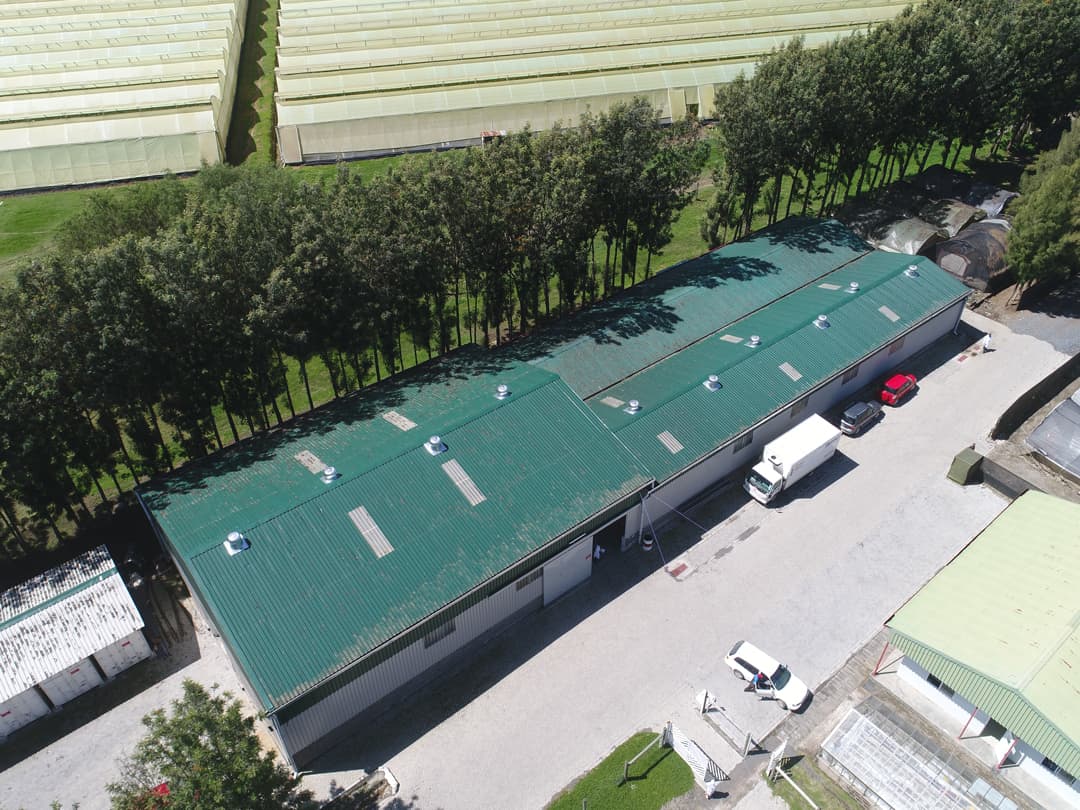
Photo: An aerial photograph of Dudutech’s Packhouse and Logistics Centre at Ladybird Farm, Naivasha (Dudutech, 2020).

Rearing biologicals is one thing – getting them around the world, alive and ready to feast, is a whole other challenge. In recent years, a significant amount of R&D focus at Dudutech has been on understanding this challenge and meeting it through innovations in quality control, cold-chain management and packaging specs. The result is consistent delivery anywhere in the world within 48 hours, without compromising the performance of the biologicals.

At Dudutech, it all starts with the people. Over 350 employees have been trained and integrated into the Dudutech family, among them doctoral and post-grad scientists, each with their own place and purpose. The team leans on their extensive collective experience to guarantee optimum product quality at every stage, from R&D to delivery on the crop.

Photo: Evans Oyo inspecting a sample under a microscope. (Dudutech/Georgina Little, 2018).

Following harvest, Jack Adundo – Technical Manager – and his dedicated QC (Quality Control) scientists vigorously check each batch on a microscopic level. By building the ISO 9001:2015 Quality Management System into our tried and tested Standard Operating Procedures, we ensure only products of the highest degree of quality make it to the customer’s crops. These safeguards are further buffered by pre-pack and after-pack sampling of each batch to aid quick troubleshooting and provide feedback into our continuous improvement program.

From there, their journey around the world begins. Eric Langat, who is at the head of the team at the Packhouse and Logistics Centre, fulfils the orders and uses a dynamic logistics network to secure the earliest possible delivery times.

Each of the packaging standards is continuously trialled and the resulting innovations have had a significant impact on how we pack and move the orders. The most important recent improvements are the packaging re-use scheme, the volume each order occupies, maintenance of conditions in transit, improved ease of use and optimised performance on delivery. 

In particular, the packing standards for our mites range combine an improved bottle shape and bespoke Duduvent cap design with streamlined shipping materials to balance performance, efficiency and size in transit. Duduvent provides a unique solution to the challenge. It ensures the air inside the mite’s bottles is cool and fresh and provides end-users with a better way to spread the mites on the crop.

While the tickets are being booked, each order enters our bio-chain. This specially designed and digitally monitored cold-chain system can maintain transit conditions over great distances for up to 48 hours.

Image: A bio-chain delivery vehicle used to transport biologicals under climate-controlled conditions. (Dudutech, 2020).

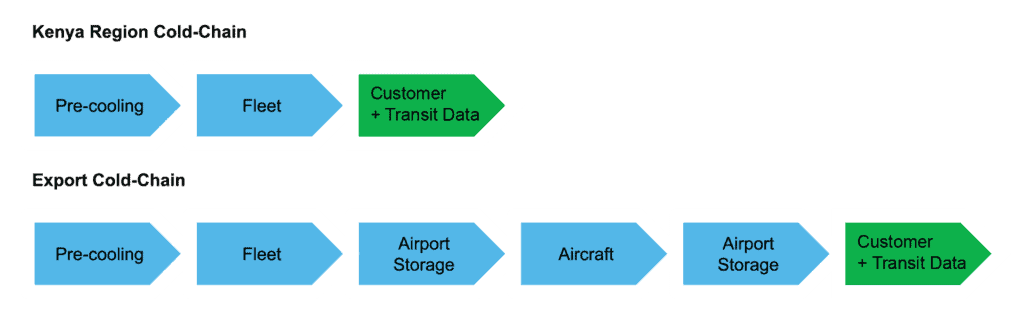
Our fleet of custom-designed delivery vehicles forms the backbone of our bio-chain network. These refrigerated trucks are used to distribute the orders from our Ladybird Farm in Naivasha directly to farmers in Kenya or to export customers via Jomo Kenyatta International Airport.

We include digital data monitors in each shipment to gather data on humidity and temperature and this information is then carefully analysed and relayed back to the technical team for further improvement.

Fig. 1. Process flow for Dudutech’s cold-chain standard operating procedure.


Want to know more?

Contact us to find out how your farm can benefit from having the freshest supply of biologicals products available.

info@dudutech.com

+254704491120

Beauveria bassiana: What about the bees?

Posted by

The effect of Beauvitech on nature’s little helpers

By John Ogechah and Cory Smit
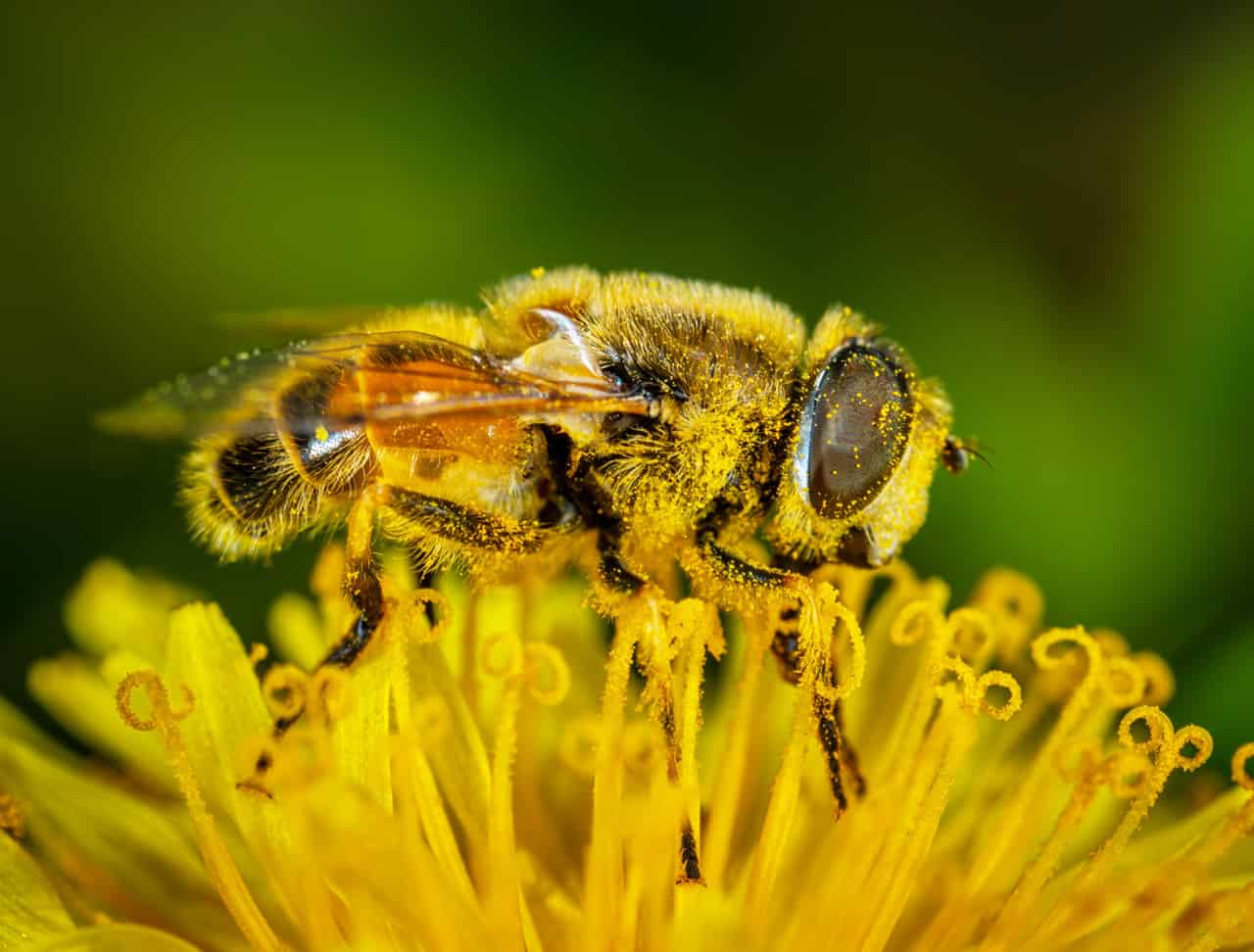
 

Beauveria bassiana is a well-known soil-dwelling entomopathogenic (insect-killing) fungus found all over the world. For more than 100 years, tons of B. bassiana spores (e.g. Beauvitech®) have been commercially produced and used for biological control of insect pests worldwide. Growers have come to rely on this clever biological action known as white muscardine disease as a major player in chemical-free pest control. 

Following increased interest in biocontrol of pest insects between 1980 and 1990, safety aspects were raised and discussed in great detail. Burges (1981) outlined the main principles and guidelines for testing the safety of insect pathogens and “that a pathogen should be registered as safe when there is reasonable evidence that it is so and in the absence of concrete evidence that it is not. A “no risk” situation does not exist, certainly not with chemical pesticides, and even with biological agents one cannot absolutely prove a negative.” 

The commercial use of entomopathogenic fungi and their products as mycoinsecticides (fungus-based insecticides), therefore, necessitates their registration based on certain safety guidelines. Beauveria bassiana is indeed registered in several countries and proof of safety to non-target organisms such as mammals, fish, amphibia, birds, pollinators etc is an important requirement before registration.

Still, the lingering question posed by farmers and indeed the greater society is “What about the bees?” In other words, how safe are mycoinsecticides and, specifically, Beauveria bassiana to these little helpers of nature?

There are numerous peer-reviewed papers on the effect of B. bassiana on honeybees and other beneficial organisms. Examples are presented in Table I below. Notable is the fact that most of the studies were done in the laboratory and only a few in the field. 

The vast majority of the studies done on bees conclude that despite the wide host range of B. bassiana, this fungus can be used with minimal impact on honeybees and other non-target organisms. Some experiments showed that B. Bassiana can be blown directly into hives to manage Varroa destructor mites (Acari: Varroidae) without a negative effect on the bee colonies (Miekle et al., 2008; Rodríguez et al. 2009). Another set of experiments looked at using honeybees to distribute B. bassiana spores directly to crop flowers and foliage (Almazra’awi et al. 2006). Similarly, no adverse effects on the bees were reported. 

In one case, however, Almazra’awi (2007) reports that B. bassiana strains caused high mortality in caged bees dusted with dry formulations of high concentrations (10⁸-10 CFUg-1). Interestingly, in the same paper (Almazra’awi, 2007), exposure of whole beehives under field conditions resulted in low mortality that was not different from the controls regardless of the isolate tested. This points to the difference between the physiological host range and the ecological host range (Hajek & Butler 2000). 

The physiological host range demonstrates the range of insect species that can be infected in the laboratory, while the ecological host range demonstrates which insects can be infected in nature or under field conditions. Non-target insects which are infected under laboratory conditions, may not necessarily be infected in nature (Zimmermann, 2007)

We conclude that despite the wide host range of B. bassiana, evidence to date suggests that this fungus can be used with minimal impact on non-target organisms, especially when isolate selection and spacio-temporal factors are taken into consideration. Our answer is unwavering: Beauveria bassiana (Beauvitech®) has no negative effect on honeybees (Apis mellifera) in normal field conditions. In fact, there are numerous examples of benefits B. bassiana can have with and for bees. 


Table I. Examples of effects of B. bassiana (strains and formulations) on beneficial and non-target organisms.


Beneficial organism Fungus (Strain/ Formulation) Lab./ Field Trials (L/F) Results/Observations Reference
Amblyseius cucumeris  B. bassiana (Naturalis-L, BotaniGard WP) L/F No detrimental effect when sprayed onto excised cucumber leaves Jacobson et al. (2001)
Aphidius colemaniOrius insidiosusPhytoseiulus persimilisEncarsia formosa  B. Bassiana (commercial formulation, strain JW-1) L Highly susceptible under laboratory conditions, lower infection rates in greenhouse Ludwig and Oetting (2001)
Apis mellifera  B. bassiana  F Conidia were applied in bee hives: low mortality and no noticeable effect on behaviour, larvae and colony characteristics Alves et al. (1996)
Apis mellifera  B. bassiana (unformulated spore preparation) L B. bassiana reduced bee longevity at the two highest concentrations tested and caused mycosis at 106–108 spores per bee Vandenberg (1990)
Apis mellifera  B. bassiana (Naturalis-L, Bio-Power) L 30-day dietary and contact studies had no significant effect; LC50 (23 days, ingestion) 9.285 µg/bee Copping (2004)
Apis mellifera  B. bassiana L High mortality in caged bees dusted with dry formulation at high concentration (108-109 CFUg-1)Very low mortality following exposure to high inoculum densities regardless of the isolate.  Al mazrawi (2007)
Apis mellifera  M. anisopliae, B. bassiana, B. thuringiensis L M. anisopliae and B. bassiana reduced survival of A. mellifera when sprayed directly, all did not induce morphometric alterations in the midgut. Potrich et al. (2017)
Arthropod and nematode populations B. bassiana (Naturalis-L) F Chlorpyrifos had a stronger negative impact than the microbial treatment Wang et al. (2001)
Bembidion lampros Agonum dorsale  B. bassiana  F/L A negligible number was infected; low susceptibility of both species Riedel and Steenberg (1998)
Bombus terrestris  B. bassiana  L/F Able to infect bumblebees; it appears that there are no risks if the fungus is incorporated into the soil or sprayed onto plants that are not attractive to bumblebees Hokkanen et al. (2003)
Carabidae: Calanthus micropterusC. piceusCarabus violaceus Cychrus caraboidesLeistus ruefescens Nebria brevicollis, Pterostichus oblongopunctatus, P. niger  B. bassiana  L No adverse effects noticed Hicks et al. (2001)
Carabidae, Staphylinidae B. bassiana  F Infection levels in adult ground beetles and rove beetles were low (Carabidae max. 7.6% and Staphylinidae max. 7.0%); an epizootic in the staphylinid Anotylus rugosus (67%) and Gyrohypnus angustatus (37%) was observed Steenberg et al. (1995)
Cephalonomia tarsalis  B. bassiana  3 h exposure to 100 and 500 mg kg−1 wheat resulted in 52.5 and 68.6% mortality Lord (2001)
Chrysoperla carnea  B. bassiana  L Temperature, starvation and nutrition stresses significantly affected the susceptibility; nutrition stress caused the most increase in adult and larval mortality Donegan and Lighthart (1989)
Coleomegilla maculate  B. bassiana (isolate ARSEF 3113) L/F No mortality was observed Pingel and Lewis (1996)
Coleomegilla maculate and Eriopis connexa  B. bassiana (isolate ARSEF 731) L Mortality after direct application of spores; exposure via sprayed leaf surfaces resulted in no infection Magalhaes et al. (1988)
Coleomegilla maculate lengi  B. bassiana (10 isolates) L 6 isolates were highly virulent, 3 isolates caused low mortality Todorova et al. (2000)
Diadegma semiclausum  B. bassiana  L Detrimental effects on cocoon production and emergence depending on the concentration Furlong (2004)
Formica polyctena  B. brongniartii  F No negative effects noticed Dombrow (1988)
Earthworms: Lumbricus terrestris and others B. brongniartii (commercial product of barley grains) L/F No effect in a lab and in field noticed Hozzank et al. (2003)
Earthworms: Lumbricus terrestris  B. brongniartii  L No effect on earthworms noticed Arregger-Zavadil (1992)
Earthworms: Aporrectodea caliginosa  B. bassiana (Bb64) L No effect on hatching rate of cocoons Nuutinen et al. (1991)
Lysiphlebus testaceipeAphidius colmani  B. bassiana  F No significant impacts on both parasitoids Murphy et al. (1999)
Megachile rotundata  B. bassiana (strain for grasshopper control) L Spray-application of flowering alfalfa in pots: female and male mortality averaged 9%; no difference in treatment and control; however B. bassiana grew out from dead bees Goettel and Johnson (1992)
Nontarget arthropods (forests) B. brongniartii  F Only 1.1% of 10.165 collected insects and spiders were infected Baltensweiler and Cerutti (1986)
Nontarget arthropods (forests) B. brongniartii  F 1671 nontarget specimens were collected: 3.4% of them were infected, mainly species from Araneae, Thysanoptera, Homoptera, Coleoptera and Lepidoptera Back et al. (1988)
Nontarget arthropods (major predators, parasitoids and pollinators on rangeland) B. bassiana (strain GHA) F No statistical differences in the abundance of aerial insects Brinkman and Fuller (1999)
Nontarget arthropods (forests) B. bassiana (emulsifiable concentrate) F From 3615 invertebrates collected, only 2.8% became infected; B. bassiana could be applied to forest soil without a significant negative impact on forest-dwelling invertebrate population Parker et al. (1997)
Non-target beetle communities B. bassiana (strain SP 16) F No detectable effects Ivie et al. (2002)
Perillus bioculatus  B. bassiana (six isolates) L 5 isolates were highly pathogenic, isolate IPP46 showed low pathogenicity Todorova et al. (2002)
Pimelia senegalensisTrachyderma hispidaBracon hebetorApoanagyrus lopezi  B. bassiana  L No infection in P. senegalensis and T. hispida; 100% mortality in the parasitoids B. hebetor and A. lopezi  Danfa et al. (1999)
Poecilus versicolor  B. brongniartii (Melocont-Pilzgerste, Melocont-WP, and Melocont-WG) L No significant negative effects on P. versicolor could be observed Traugott et al. (2005)
Predatory mites:O. insidiosus  B. Bassiana (Botanigard ES) F Can be used Shipp et al. (2003)
A. colemaniDacnusa sibiria      Not recommended during application of B.bassiana   
Parasites:         
Encarsia formosa Eretmocerus eremicusAphidoletes aphidimyza      Used with caution during application of B. bassiana   
Prorops nasuta  B. bassiana (3 isolates) L Strain 25 caused the lowest infection level De La Rosa et al. (2000)
Serangium parcesetosum  B. bassiana  L The predator had significantly lower survivorship when sprayed with B. bassiana than with P. fumosoroseus; feeding on B. bassiana contaminated prey caused 86% mortality Poprawski et al. (1998)

Adapted from Zimmermann (2007).


References:

William G. Meikle, Guy Mercadier, Niels Holst, Christian Nansen, Vincent Girod. Impact of a treatment of Beauveria bassiana (Deuteromycota: Hyphomycetes) on honeybee (Apis mellifera) colony health and on Varroa destructor mites (Acari: Varroidae). Apidologie, Springer Verlag, 2008, 39 (2), pp.247-259. Ffhal-00892301f

Marta Rodríguez, Marcos Gerding, Andrés France. Selection of entomopathogenic fungi to control Varroa destructor (Acari: Varroidae). Chilean J. Agric. Res. – Vol. 69 – Nº 4 – 2009

Burges, HD. 1981. “Safety, safety testing and quality control of microbial pesticides”. In Microbial control of pests and plant diseases 1970–1980, Edited by: Burges, HD. 737767. London: Academic Press.

Hajek, AE and Butler, L. 2000. “Predicting the host range of entomopathogenic fungi”. In Nontarget effects of biological control, Edited by: Follett, PA and Duan, JJ. 263276. Dordrecht: Kluwer Academic Publishers.

S. Al Mazra’awi, J. L. Shipp, A. B. Broadbent, P. G. Kevan, Dissemination of Beauveria bassianaby Honey Bees (Hymenoptera: Apidae) for Control of Tarnished Plant Bug (Hemiptera: Miridae) on Canola, Environmental Entomology, Volume 35, Issue 6, 1 December 2006, Pages 1569–1577, https://doi.org/10.1093/ee/35.6.1569

Zimmermann, G. (2007) Review on safety of the entomopathogenic fungi Beauveria bassiana and Beauveria brongniartii, Biocontrol Science and Technology, 17:6, 553-596, DOI: 10.1080/09583150701309006

Al Mazra’awi, M. S. (2007). Impact of entomopathogenic fungus Beauveria bassiana on honeybees, Apis mellifera (Hymenoptera: Apidae). Worl Journal of Agricultural Science 3(1): 07-11, 2007.

Thrips: Early Detection Is Key!

Posted by

Mastering monitoring tools for improved Thrips control.

Photo: Charles Njuki inspecting a Sticktech sticky card.

By Festus Kilee, John Ogechah and Cory Smit

As more growers around the world face Thrips (Order: Thysanoptera) and the crop challenges they bring, information and understanding have never been more important. Unnoticed Thrips challenges pose a significant threat to growers as their populations can quickly balloon, impacting on crop production, quality and overall cost. In particular, when crops are destined for overseas markets which are typically sensitive to quality and have strict phytosanitary restrictions in place, ignoring this threat may result in significant financial losses when the crop fails to make it to market. Inversely, with Thrips monitoring data available, growers can run timely interventions and target hot-spots. Early detection then translates into reduced spray volumes and reduced crop losses. 

Fortunately, there are well-established methods of tracking and monitoring Thrips populations on crops. By regularly gathering Thrips data using sticky traps, pheromone lures and manual observation techniques, growers can get a head start and inform their control decisions, mitigate crop losses and save money.

Methods of early detection

Global crop protection research efforts have resulted in a number of monitoring tools and techniques being developed for use in a farm environment. In this article, we will cover scouting, traps and pheromone lures for Thrips (however, these techniques can be applied to a variety of other flying crop pests.)

Scouting

Scouting uses visual inspections of the plants to note Thrips presence and pressure. A simple technique involves counting larvae by gently tapping a sample of the crop onto an A4-sized sheet of white paper, any Thrips which drop to the paper are then counted using a magnifying lens or loupe and recorded.

Sticky traps

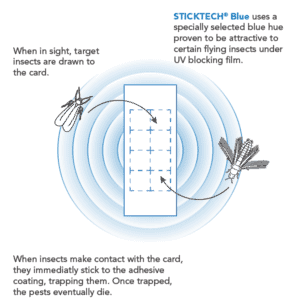
Different insect pests are attracted to different colours (wavelengths of light), with yellow and blue so far proving most attractive to crop pests. For example, Western flower thrips (Frankliniella occidentalis) which are most common and difficult to control, particularly favour blue traps over yellow ones.


Fig. 1. Sticktech Blue mode of action.

The colour-tuned material on these traps attracts the pests to an adhesive covered surface, which they then stick to, becoming trapped. Researchers or growers, then collect the data from the traps by counting and identifying the Thrips and other insects caught. This data, when plotted over time, reveals the pest trends for the area in question.

Dudutech has a range of tools for early detection of flying stages:

  • Sticktech – uses blue or yellow sticky cards which are placed between 10 – 15 cm above the plant canopy.
  • Optiroll – uses blue or yellow sticky rolls which are hung between poles and positioned 10 – 15 cm above the plant canopy.

Pheromones

These are synthetic chemical signals which mimic natural insect pheromones to attract the target to a trap. Since these are based on nature, these pheromone lures are species-specific. However, there are a wide variety of pheromone lures available for a number of important crop pests.

What other benefits?

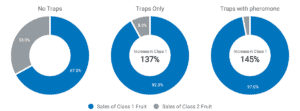
Beyond the scope of pure observation, these sticky traps are also a valuable part of successful IPM practices. When researchers (Kirk and Sampson, 2013) looked at the potential economic returns gained from using traps and pheromones as part of a crop protection strategy for strawberries, they revealed a quality effect on the overall yield. The charts below illustrate their findings:

Chart 1. Quality effect of sticky traps in strawberries (Kirk and Sampson, 2013).

In summary, Kirk and Sampson (2013) found that trapping significantly increased the proportion of Class 1 fruit, and pheromones further improved their efficacy. These measures would be particularly suited to growers who wish to optimise their yield quality and those whose crops undergo strict quality checks before entering the market. 

When used together, these tools can provide a thorough picture of the current and future trends in Thrips challenges on a farm. Having these measures in place early could provide the vital data farmers need to make informed and well-timed crop protection decisions, reducing cost and improving crop quality.

Want to know more?

Contact us on info@dudutech.com

Chart 1 developed from the following research paper:
Sampson, Clare & Kirk, William. (2013). Can Mass Trapping Reduce Thrips Damage and Is It Economically Viable? Management of the Western Flower Thrips in Strawberry. PloS one. 8. e80787. 10.1371/journal.pone.0080787.
“Dudutech recycles about 577kgs of plastic per week”

Posted by

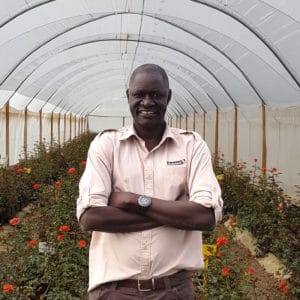
“Having the preservation of the environment at our core, we continually ask ourselves what more we can do to help build a sustainable future.” – Barnaba Rotich

By Cory Smit, Dudutech Marketing


As hygiene supervisor at Dudutech, Antony Matete oversees the recycling of 10,500 product bottles and 200 high-density boxes per week, helping to mitigate the environmental impact of getting our products to the fields where they do their work. Once cleaned and all microbial residues have been removed, the materials are reintegrated into the packaging processing line for use on future orders.

The recycling scheme aims to capture and process at least 70% of all the bottles boxes delivered within Kenya but often exceeds this. According to Eric Langat, Dudutech Logistics and Packaging manager, “the delivery drivers who collect the returned materials typically bring back between 5-10k bottles per week from customers.” In numbers, the scheme reintegrates at least 577kgs of plastic per week or ~30t per year.

By using high-quality HDPE bottles and shipping boxes for the majority of our products, the standards are designed with recycling in mind, ensuring that the materials are durable, easy to clean and can be washed for reuse many times.

To ramp-up throughput, we commissioned an automatic bottle washing machine in January 2020, enabling Anthony and his team to process up to 200 bottles in 5 mins. The high-pressure machine thoroughly cleans the bottles of any microbial residues, dust and contaminants.

Barnaba Rotich, Head of Commercial at Dudutech said, “as a business in the 21st century, it is imperative that we work towards the long term sustainability aspects of our business by taking care of the short term… Having the preservation of the environment at our core, we continually ask ourselves what more we can do to help build a sustainable future. Our mission often takes us to the smallest common denominators of each part of the business, allowing the adjustments, such as the recycling scheme, to have a deep impact on efficiency without compromising quality.”

Contact us to find out more about how to participate in the packaging returns and recycling scheme.

Email us on info@dudutech.com or call +254 704 491120.

Dudutech moves to connect customers and R&D

Posted by

Meet the new Technical Product Team

By: Cory Smit – Dudutech Marketing and Communications

Dudutech is excited to announce the introduction of the new Technical Product Team, John Ogechah and George Mala. The newly created role comes as part of a commitment to continuous improvement and aims at connecting all arms of the business to deliver insights, facilitate feedback and provide support to the Technical Liaison Officers (TLOs) who work directly with growers.

John Ogechah, Dudutech Technical Product Manager, during an in-field instructional session.

John Ogechah, Technical Product Manager (formerly Dudutech Training Manager), is an entomologist with extensive in-field experience and a strong drive for agricultural education. 

“I have spent the last 15 years of my fulfilling professional life empowering farmers with knowledge and skills on sustainable agriculture to survive and grow in the dynamic agricultural landscape.” said John. “The Product Management role is another exciting opportunity to devise solutions to farmers’ problems by steering the vision, design and execution of products that are truly good for the people, planet and profit,” he continued. 

George Mala, Dudutech Technical Product Lead, at the Dudutech Trial Site.

George Mala, who also shifted from the Training department, is an IPM evangelist and horticulturalist with over 20 years’ experience in the industry, 13 of which have been at Dudutech. 

According to George, “unlike conventional crop protection products, biopesticides are unique in that their users require closer technical support.” He went on to say, “this role is exciting for me in that it builds on my experience in on-farm training and focuses it on providing this support to growers.”

The customer-facing function positions John and George as feedback channels between the customers and Dudutech to foster an environment for open discourse and to create awareness for and provide information on IPM in the form of training sessions. Working side-by-side with the TLOs, who have an in-depth understanding of each farm they look after, the TPLs bring new synergies into action to advise on how to drive the performance of their IPM strategy.

A key role of the TPLs is to manage extensive agronomical trials to gather a rich data set on performance, compatibility and best practices for Dudutech’s range of current and upcoming products. John and George will use the data they develop to inform improvements in production, technical operations, training and product materials.

According to Tom Mason, Dudutech MD, “the technical product roles build a robust communication channel between the infield customer experience and our manufacturing facilities and partners both locally and abroad. This will ensure that product efficacy, correct use, and compatibility with farmers programs are always central to our business practice. Enabling the farmer to maximise the value that Dudutech is able to offer.

“John Ogechah and George Mala are deeply experienced professionals who have supported our customers with technical insight and knowledge, sharing with customers in South Africa, Zimbabwe, Uganda, Kenya and the UK,” Tom said, adding that he is pleased that Dudutech can now “focus their talent and experience in a more product-centric manner.” 

Tom went on to explain that, “Integrated pest management (IPM) is evolving at an incredible pace, horticulture and in turn crops such as avocado, citrus, viticulture and row crops are under further pressure to reduce residue levels in the crop and synthetic chemistry is now more than ever focused on compatibility with biological solutions. At the centre of all this, farmers need to do more with less and to remain competitive the core focus is to boost yields.” 

In memory of Philip Carlton-Smith

Posted by

The Dudutech team is deeply saddened by the passing of Philip Carlton-Smith on 26 March 2020. 

As CEO of Ecospray and IBMA UK Chairman, Philip Carlton-Smith has been a part of the Dudutech community for over 5 years, uniting behind a common cause to promote sustainable agriculture. According to Ecospray’s Chairman, Stephen Falder, Philip had “bravely engaged with an aggressive and serious Cancer for months.” 

Tom Mason, Dudutech MD, who knew Philip personally, said that he was “an incredible business leader, he leaves and powerful and memorable presence in the entire Biological Crop Protection industry that will be sorely missed. I am pleased that we will continue the work that Philip and the entire Ecospray team helped us develop for the East and Southern African markets”.

Memo from the MD: COVID-19

Posted by

FAO: External and Internal Communications
REF: Covid19
DOI: 19/03/2020

The health and safety of our community of customers, employees and partners across the world remains our top priority.

As a business we have installed strict measures in our operations to reduce risk against Covid19 / Coronavirus:

  1. Frozen all non-essential visits to our facilities.
  2. Frozen all non-essential travel.
  3. Background questionnaires and disclosures for site visitors.
  4. Sterilization liquid at all points of entry, employee clock-in facilities, offices, production facilities and work stations – including all transport and delivery vehicles.
  5. Reduction of face to face meetings with a transition to Microsoft teams, essential meetings are being held outdoors in direct sunshine with a 1 m spacing.
  6. Robust tracking and monitoring of employee cases across our global group of companies.
  7. Facilitating remote employees to continue work remotely.
  8. Facilitating and supporting self-quarantine.
  9. Robust communications to customers globally and locally in the event of any disruptions or legal changes.

Dudutech continues to operate with the same degree of rigour and discipline as is customary to our business operations and we will continue to maintain our communications as the challenges and solutions evolve.

Kind regards,
Tom Mason
Managing Director
Dudutech

Farewell Martin Hudson!

Posted by

Martin Hudson stepping down as CEO

Flamingo Horticulture Investments, Dudutech’s parent company, has announced this week that Martin Hudson will be stepping down as CEO, bringing his 25-year career in the business to a close. Martin was instrumental in driving Flamingo to become what it is today – the leading premium flower and fresh produce supplier to the UK. We would like to take this opportunity to wish Martin farewell after an outstanding tenure at Flamingo.

Dudutech-Nuffield Project Featured at Oppenheimer Research Conference

Posted by

Dudutech Zimbabwe’s Phil Weller presented his Nuffield research at the 10th Annual Oppenheimer Conference

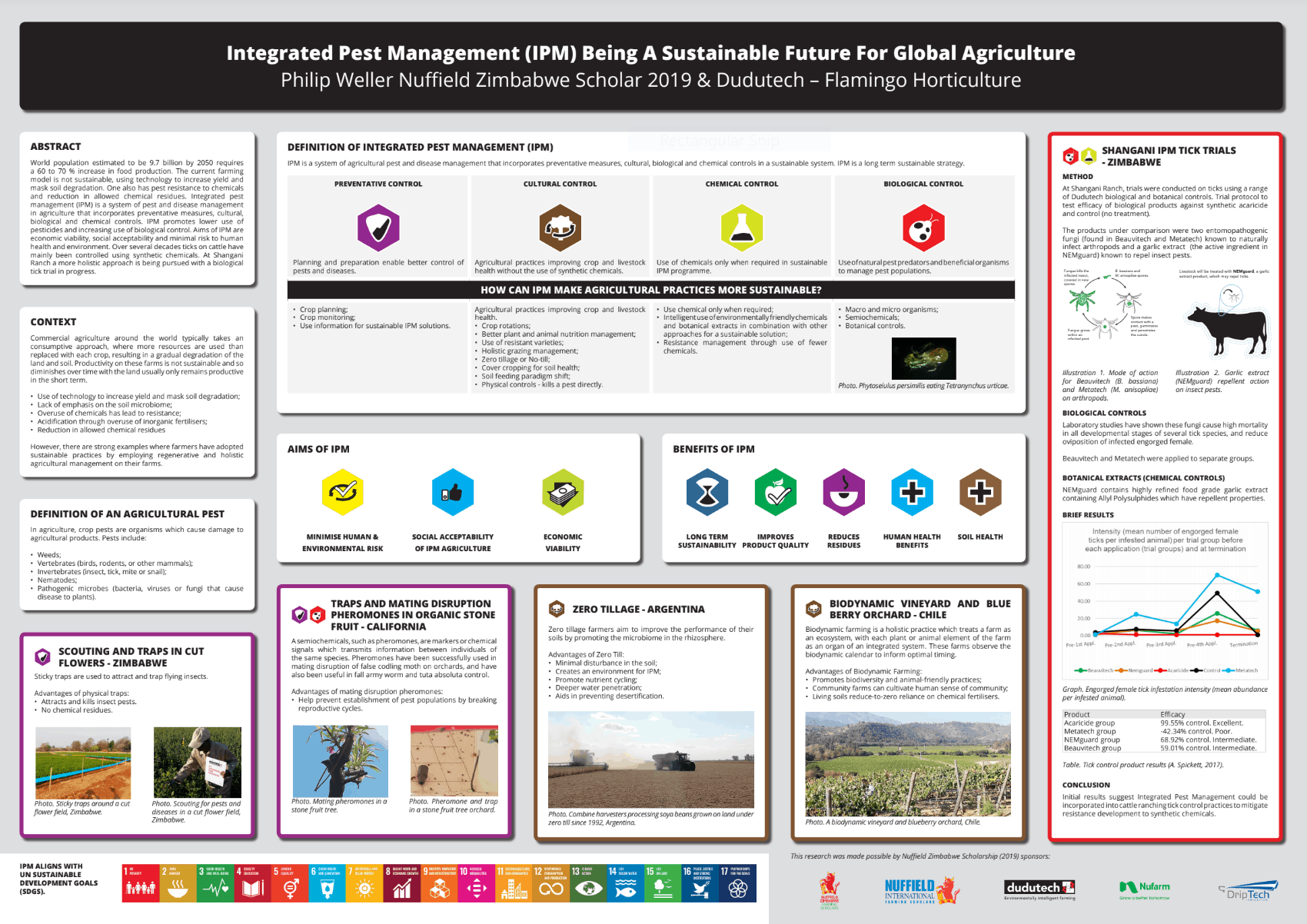
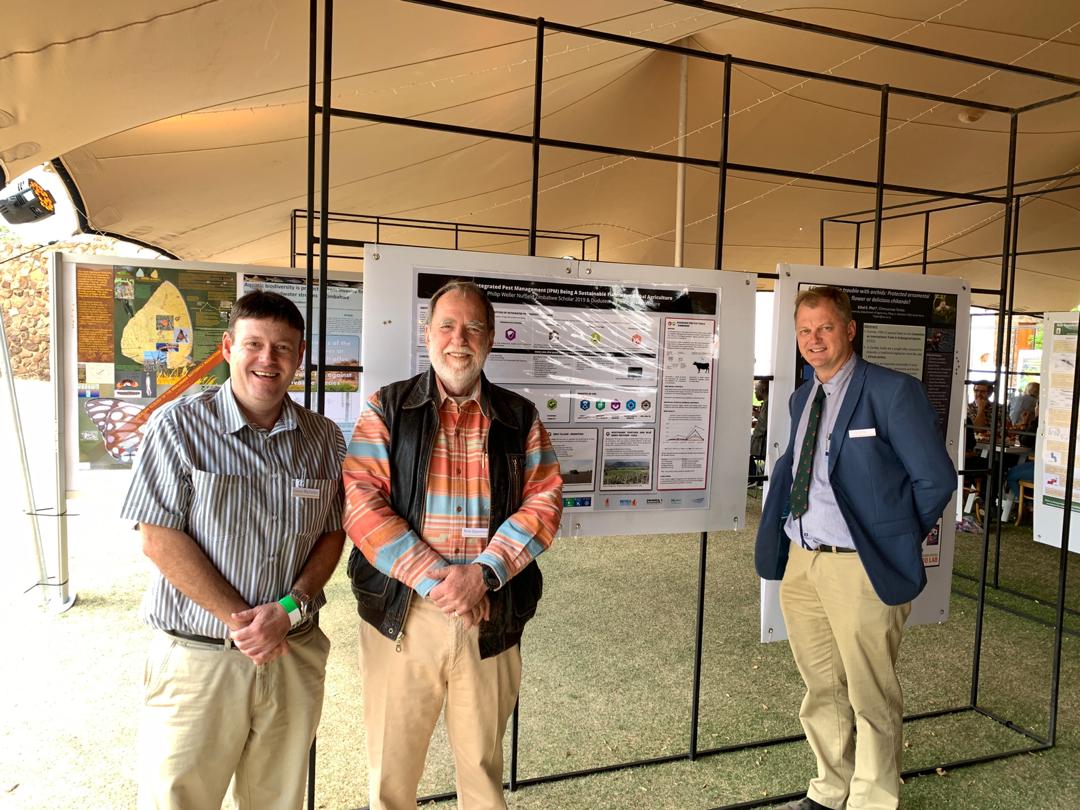
Photo. Phil Weller (Dudutech Zimbabwe) with his research poster, visited by Nicky Oppenheimer and Duncan MacFadyen at the 10th Oppenheimer Research Conference.

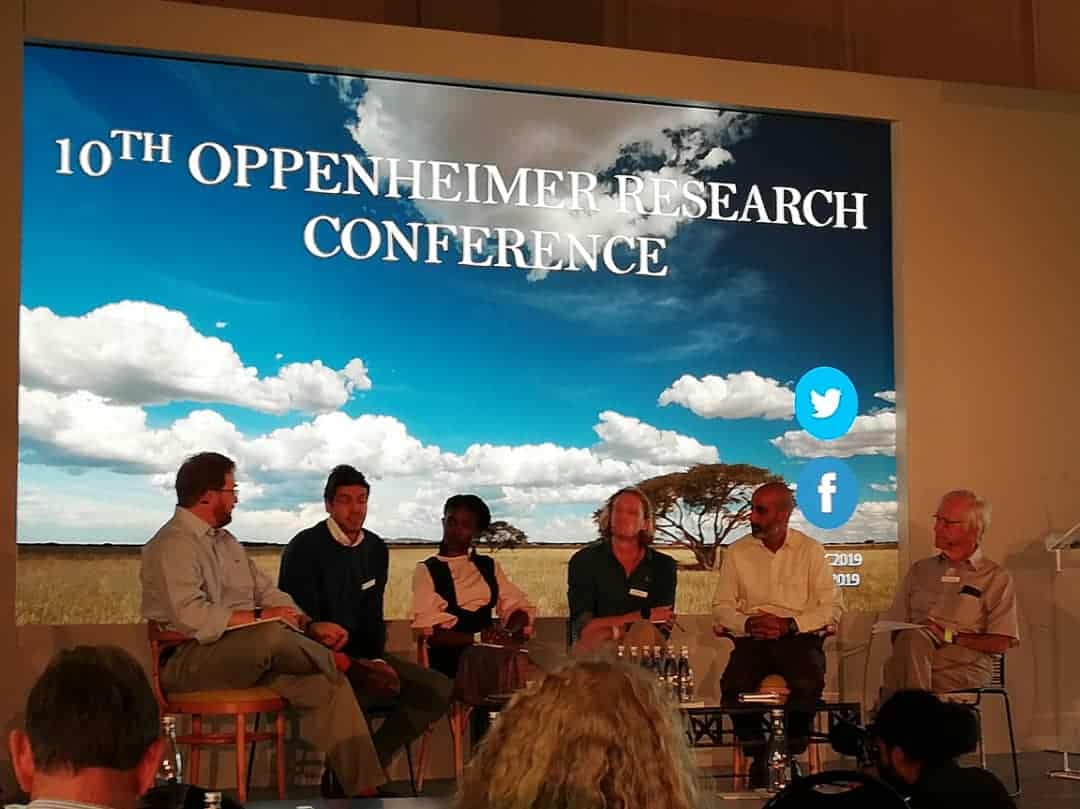
Phil Weller (Dudutech Zimbabwe and Nuffield Zimbabwe) had the privilege of presenting his research at the 10th Oppenheimer Research Conference (1-3 October 2019). The conference, which brought together over 348 delegates with interests in natural and environmental science, aims to contribute to the global conversation on ecosystems and biodiversity in a meaningful way.

“Work with nature, don’t impose your will on nature,”
Nicky Oppenheimer, 10th Oppenheimer Research Conference 2019

This year Phil Weller presented research from his Nuffield research project on how Integrated Pest Management (IPM) is being used in a commercial context around the world. The aim of the project was to highlight how IPM can be used globally for sustainable agriculture on a wide variety of crops and livestock.

During the introduction of the conference, Nicky Oppenheimer said, “work with nature; don’t impose your will on nature,” reaffirming the ethos at the heart of Dudutech and Phil’s research project.

Photo. Jonathan Oppenheimer with a panel at the 10th Oppenheimer Research Conference, Johannesburg, South Africa 2019.

The research:

Graphic. A poster for Phil Weller’s Nuffield Zimbabwe project.


TreeTech 2019 a success

Posted by

Thanks to the incredible turn-out, “TreeTech 2019 – Growing avocados in a new era” was a fantastic success with over 80 growers from the avocado industry in attendance at the World Agroforestry Centre and more than 2600 minutes streamed live on Facebook. The event which focussed on the sustainable production of avocados brought together industry growers, leaders and thinkers to help shape meaningful discourse from boardrooms to orchards – inspiring a future of growing avocados which routinely deploys sustainability practices at every level.

Avocado growers are facing an exciting future with growing markets in the US, EU and China as the millennial consumer class matures. However, at the same time, the industry faces many challenges in the form of climate change, export regulations, pest control issues and public criticism of habitat loss and deforestation. By working closely with ICRAF, Goldsuite and Insect Science, we created a symposium programme around issues which avocado growers face on a daily basis. The course was made up of a series of lectures delivered by thought leaders in the topics of advanced nutrition, integrated crop and pest management and agroforestry.

The TreeTech concept was born out of the question of what IPM providers are doing to support the fast-growing avocado industry globally and closer to home in Kenya. We hoped this event would foster an extension of the technology enjoyed by veg and flowers to tree and fruit crops.

Interested in attending Dudutech events?

Sign up to our info-mail here:


NEMguard® active ingredient now on PPPL

Posted by

Garlic extract officially added to PPPL and PoKeMon positive list

The active ingredient in NEMguard, garlic extract, has been officially added to the PPPL (Plant Protection Product List) and PoKeMon positive list by FoodExperts S.L. As the name suggests, these specially curated lists promote the legal, safe and responsible use of plant protection products. For more info, go to https://web.food-experts.com/

logotipo Food Experts

Dudutech launched NEMguard SC earlier this year, with the product positioned for sustainable management of nematodes. The recognition of garlic extract, the active ingredient in NEMguard SC, as a legal, safe and responsible plant protection product is a major win for farmers and the environment. Growers can now mitigate their use of potentially harmful active ingredients which riddle the market by opting to deploy garlic extract found in NEMguard SC to combat their plant-parasitic nematode problem.

Find out more about NEMguard SC at https://www.dudutech.com/products/nemguard/

261 Trained at Sher Afriflora, Ethiopia

Posted by

Ismael Yassin, from the Dudutech Ethiopia team, with an IPM training group from Sher Afriflora, Ethiopia. June 2019


Dudutech Ethiopia and the Dudutech Training Department joined forces to roll out a training programme for Sher Afriflora, spanning 261 employees and three of their farms in Ethiopia. The core focus of the training was geared towards raising basic IPM awareness among the participants, including over 60 at management-level and more than 180 scouts.

Central pillars to IPM success are a clear understanding and unified execution at all levels. This is achieved through effective, regular training at all levels for our growers. Discover how Dudutech Training can help your growing operation reach its potential, contact dudutechtrainers@dudutech.com.


Marvin Odula and John Ogechah from Dudutech Training conducting training for farm managers as part of the Sher Afriflora IPM awareness training. June 2019

Dudutech Zimbabwe’s Phil Weller Selected for Nuffield Scholarship

Posted by

Phil Weller, Nuffield Scholar, in a field on his farm outside Harare, Zimbabwe.

Phil Weller, authorised Dudutech distributor for Zimbabwe, has been selected as a Nuffield International Farming Scholar for 2019. The prestigious global programme focuses on building personal capacity, propagating excellence in agriculture and driving thought leadership on local and international levels.

Since its establishment by Lord Nuffield in 1947, the scholarship has inducted 1,700 agriculturalists from around the world, and only 13 in 2019. The scholarship aims to develop leadership and expertise to keep the agriculture industry dynamic, competitive and at the service of society.

The programme is structured in three phases. The Contemporary Scholars Conference begins the journey in March, bringing together all 70 Nuffield Scholars from around the world for up to 10 days. Following that is the Global Focus Programme, in which the scholars will travel abroad to a country of interest for 7 weeks. According to Nuffield International, “scholars benefit from exposure to a broad range of agricultural systems, in very different political and social environments, whilst travelling in a close group of individuals of varying backgrounds during an intense programme.” The third and final part of the programme is the Individual Research Travels and Report, whereby the scholars travel to research their topic. Their 10,000-word report is then presented to a conference of peers, contributing to the global agricultural knowledge-base.

Nuffield International, the non-profit body which provides support and governance to the scholarship, has aligned with the UN Sustainable Development Goals, recognising the vital role agriculture plays in pursuing many of them. In doing so, Nuffield Scholars are brought to the front line to lead their industry towards a sustainable future all.

Dudutech is proud to be associated with Nuffield Scholar Phil Weller, who has decided to study “Integrated Pest Management (IPM) as the sustainable future for global agriculture,” which he affirmed in an interview. The research will focus on how IPM can make major global agricultural sectors more sustainable through the potential for the system to reduce industry reliance on chemical pesticides by increasing the use of biocontrols. Phil’s experience in the industry developed his view that “profit and sustainability go hand in hand and (IPM) is the key for the future.”

Weller said his IPM research aims to aid in addressing the global challenges of “residues on crops, resistance to chemicals and land pressure.” He said he hoped that “it will encourage farmers to look at agriculture in a more holistic manner with sustainability being the key.”

His personal ambition is to gain an up to date understanding of global trends in sustainable  agriculture, agricultural policies and to broaden his professional network. He went on to say that he hoped his research would help to give back to Zimbabwe in terms of bringing forward the latest IPM technology.

Weller’s earlier studies saw papers published on papaya fertiliser trials and avocados. As a grower of cut flowers for the export market, Phil developed a deep interest in Integrated Pest Management (IPM) to help combat pest and disease in a sustainable, environmentally friendly way. He credits using IPM on Tonsberg Farm, his own growing operation in Zimbabwe, as a key to accessing foreign markets, where the regulations are steadily becoming more restrictive against chemical controls.

To finance their studies abroad, Nuffield Scholars seek investment from key businesses in relevant fields. Beside Dudutech (Kenya), Phil Weller has received investment from Nufarm (Australia), Drip-Tech (Zimbabwe) and Nuffield International. The investors form a network to support and disseminate the research done through the scholarship. The Nuffield Scholarship aligns well with Dudutech’s own emphasis on furthering an understanding of global crop sciences through education and research.

As a Nuffield Scholar, the potential understanding gained from Phil Weller’s research journey while participating in the scholarship has far reaching effects on the future of sustainable agriculture and for Dudutech. Follow this story as it develops on our social media channels www.facebook.com/dudutech.

To find out more about the Nuffield Scholarship, go to http://www.nuffieldinternational.org

The War on Red Spider Mites

Posted by

Tetranychus urticae – Pic: J. Holopainen

Despite their tiny size, red spider mites (Tetranychus urticae) have a big impact on global agriculture, causing extensive damage to a wide variety of plants and crops and they have a terrifying super-power. These tiny super-pests are potentially resistant to the narrow range of available acceptable pesticides. However, the agriculture industry has minute but powerful weapons to fight the mites – biological controls (or biocontrols).

Biocontrol is a branch of Integrated Pest Management (IPM) on the forefront of scientific advances in long term agricultural sustainability using the pest’s own natural enemies against them while reducing reliance on chemical pesticides which can harm people and the environment.

Dudutech, an IPM company based in Naivasha, Kenya, has over ten years experience in designing and developing biocontrols used in the management of red spider mites in large scale agriculture. In particular, Dudutech has successfully developed two powerful biocontrol products: PHYTOTECH® and AMBLYTECH®.

PHYTOTECH® is a highly targeted biocontrol which deploys the beneficial mite Phytoseiulus persimilis, which actively searches for and feeds on red spider mites in all lifecycle stages. Once PHYTOTECH® has cleared pest, they either leave in search of more food or eventually die off. This makes PHYTOTECH® a precision weapon in the war against red spider mites.

Similarly, AMBLYTECH® is also a natural enemy of red spider mites, but the beneficial mite Amblyseius californicus are able to go for long periods without feeding. Although Amblytech prefer to feed on red spider mites, they also feed on Thrips and nectar. This features allow AMBLYTECH® to be used preventatively, protecting plants from red spider mites over longer periods of time.

When growers use PHYTOTECH® and AMBLYTECH® they harness the power of nature to sustainably protect their crops against red spider mites. Without the harmful chemical pesticides in their growing practices their crops are healthier, pre-harvest intervals are reduced to zero and pesticide resistance is avoided.


Further info:

Red spider mites also known as two-spotted mites, or scientifically as Tetranychus urticae, are arthropods which use their needle-like mouthparts to feed on plant tissue, causing yellowing or greying on leaves. If not brought under control, they can cause plants to completely lose their leaves. When T. urticae feed on flowers brown speckles appear on the petals.

Red spider mites have a lifespan of up to 16 days and peak hatching occurs at around 27°C, developing from an egg into an adult, reaching around 0.4mm long, within 8 days. Each female can lay up to 20 eggs per day – this rate can see their populations balloon within a short time frame.

T. urticae feed on more than 200 different species of plant and are regarded as highly economically important, due to their destructive impact on global agricultural produce.

Zimbabwean authorities approve range of ICM products from Dudutech

Posted by

After a rigorous registration process, Phil Weller, the official distributor of Dudutech products in Zimbabwe, has received the official rubber stamp on a range of pest and crop management solutions. Among the products now available to farmers in Zimbabwe are MYTECH, TRICHOTECH, LECATECH and BEAUVITECH, microbial products used for the management of pests and diseases, and the intelligent chemicals pHusion and Trident used to boost crop development. The country, which has a tradition of commercial agriculture, is set to directly benefit from these innovative products through improved plant health and more sustainable crop and soil practices.

More about the products:

MYTECH contains Paecilomyces lilacinus (F18), a naturally occurring nematode killing fungus used to manage plant parasitic nematodes including Root knot, Cyst, Root lesion, Burrowing and Reniform amongst others.

BEAUVITECH contains spores of Beauveria bassiana J25, a fungus which kills Thrips and whiteflies through an entomopathogenic processes.

LECATECH is a biological insecticide containing Lecanicillium lecanii J27, a naturally occurring specialised entomopathogenic fungus which targets whiteflies.

TRICHOTECH contains spores of Trichoderma asperellum a soil dwelling fungi that is beneficial to plants. The fungus is antagonistic to soil pathogenic fungi and has been used globally for control of soil borne fungal diseases caused by Fusarium spp., Pythium spp. and Rhizoctonia spp. In addition, the strain is known to increase plant vigour.

pHUSION is a foliar feed containing 3-21-23+2% Phosphite + Silicon. The Si in pHUSION stimulates phosphite metabolism within the plant leading to increased root development even during stressful conditions.

TRIDENT is a folliar feed containing Zinc, Copper & Silicon – essential elements for plant health.

Dudutech cutting edge pest controls now available in Tanzania

Posted by

Growers in Tanzania can now benefit from a range of Dudutech’s biological pest control products. The portfolio approved by Tanzanian authorities includes beneficial mites and fungi used to sustainably protect crops against Thrips, red spider mites and root knot nematodes. The products, traded as BEAUVITECH, MYTECH and PHYTOTECH, enable flower and vegetable growers to harness nature to protect their crops in a sustainable, environmentally intelligent way.

These solutions were specially designed and developed under a “by growers for growers” mantra to provide farmer-focussed alternative approach to crop protection. In the past, farmers relied heavily on chemical pest controls which are potentially harmful to the environment, people and long term economic viability of agribusinesses.

Thrips, red spider mites and nematodes can be difficult to effectively manage using chemicals alone. This is due to a confluence of problems compounding challenges such as resistance management, market restrictions, non-target effects and safety restrictions. When these issues arise, farmers suffer lower productivity, reduced plant quality and increased costs. Using biocontrols addresses each of these while protecting the long term future of growing and selling crops.

The Products

PHYTOTECH is one of Dudutech’s flagship biocontrol products, it deploys specially reared beneficial mites called Phytoseiulus persimilis, powerful natural predators which actively hunt and feed on red spider mites including their eggs, nymphs and adults. PHYTOTECH is safe to use and does not face natural resistance issues, unlike many routinely used chemical controls.

BEAUVITECH contains spores of a specially developed entomopathogenic (insect-killing) fungus called Beauveria bassiana which naturally targets Thrips in vegetables and flowers. When the spores come into contact with the target, they attach and penetrate the insect before feeding on internal tissue, killing the pest. Spores then emerge from the cadaver, ready to attack a new host. The formulation was designed to allow farmers to apply the product and safely interact with the crop immediately after spraying.

MYTECH contains formulated spores of Paecilomyces lilacinus, a nematophagous fungus which traps and digests root knot nematode adults, juveniles and eggs in the soil. MYTECH spores attach to a target nematode then form mycelia to trap it before invading and feeding on the host. The spores then emerge to continue the lifecycle on a fresh host. MYTECH is applied to the growing medium using drip irrigation or spray equipment to allow the fungal colonies to easily spread through the soil to infested regions in the crop. Chemical controls for root knot and other pest nematodes often harm beneficial non-target macro and micro organisms living in the soil around the crop roots. By using MYTECH growers can manage root knot nematodes without damaging the natural soil biome which crop plants rely on.

What this means for Tanzania

Livingstone Chepukel, Dudutech East Africa Sales Manager:
“Tanzania’s agriculture sector is large and growing but farmers face major challenges in sustainably protecting their crops against pests and diseases which ultimately impact on access to external markets and their bottom line. Dudutech’s entry into the market is an important step forward in securing the long term future of the agriculture industry in Tanzania.”

Flamingo commits $2.4million investment to Dudutech expansion

Posted by

Flamingo Horticulture Investments (FHI Ltd), a Sun Capital Europe portfolio organisation, announced that they will make a further investment of USD 2.4Million in subsidiary business Dudutech, Africa’s leading Biological Pesticide Manufacturer.

Dudutech a is high growth biotechnology business in operation since 2001 that plays a critical role in allowing their many international and Kenyan customers and the Flamingo Group to farm sustainably and adhere to farming and produce regulations across the globe.

To provide farmers with sustainable solutions, Dudutech’s team of over 250 technicians, masters and doctorate level scientists manufacture insect-killing fungi and beneficial predatory insects and mites, which are used as part of an Integrated Pest Management strategy, where farmers combine pesticides and traditional synthetic chemical pesticides to tackle agricultural pests and diseases.

Dudutech will direct the additional funding towards expansion of production facilities at the biofactory site in Naivasha, Kenya, including an additional 4ha of greenhouses and an insectary. The project is aimed at increasing production capabilities to provide additional beneficial predatory insects availability to meet growth in demand for biologicals and satisfy the needs of major growers in Africa, Europe and the Americas.

Thomas Mason, Managing Director Dudutech says:

We are incredibly excited to see Flamingo Horticulture Investments backing Dudutech. The new investment will be used to further expand the company’s manufacturing capacity. Alongside this investment Dudutech will be recruiting into its management team, broadening its product range and increasing the scope of its international operations.

This investment will allow us to grow our services to our customers in Africa, Europe and the Americas and ensure availability of our beneficial predatory insects, especially during peak seasons, where demand has outstripped supply in the past.

Martin Hudson, CEO Flamingo Horticulture Investments comments:

Under the stewardship of an outstanding management team, we believe that Dudutech has consistently demonstrated its ability to deliver on investment strategies, it now plays a critical role in the supply of insect killing fungi and beneficial predatory insects and mites for farmers globally.

ABIM 2017: The Biggest Biocontrols Gathering – Ever

Posted by

Photo: David Cary, IBMA Executive Director said “We are constantly encouraged by the growth in visitor numbers this is a reflection of the Steering Committee’s continuing commitment to promoting a unique event showcasing innovation, excellence and professionalism in the industry.”

Dudutech was at the biggest gathering of the biocontrol industry ever, held in October this year. Tom Mason (Dudutech MD) and Barnaba Rotich (Dudutech Commercial Manager) were among the record-breaking delegation of 1050 people from over 500 companies at the 12th Annual Biocontrol Industry Meeting (ABIM) held in Basel, Switzerland.

Recent growth in the biocontrols industry correlates to strong growth in organic farming and. According to Lucius Tamm from Research Institute for Organic Agriculture (FiBL), organic farming, despite having boomed by 455% in 17 years from 11 million ha to 50 million ha, provides a smaller market than conventional agriculture. This information hints at the optimism for the future of the industry as biocontrols move closer towards improving mainstream awareness and acceptability.

ABIM 2017 was also a platform for innovation, information and unprecedented face-to-face networking opportunities. The meeting provided an interactive audience of the world’s leading biological technology producers to 69 individual exhibitions and speeches from industry leaders. Tom Mason said the gathering provided a space for “cross pollination of ideas, commercial opportunities and alliances … in a single forum in Basel, Switzerland.”

Tom Mason went on to say, “it’s also an opportunity for members of the International Biological Manufacturers Association (IBMA) to meet and agree upon how this industry association will represent their voice with regulators and the broader industry. Since the formation of the parent association Bio Protection Global (BPG) in 2014 the board of BPG also congregates to discuss the broader global industry challenges and opportunities. As 2018 president of Bio Protection Global I am trying to drive the success of BPG in a similar fashion to the chemical industry association Crop Life International and we hope to make good progress during the course of 2018, alongside Board Chair Rick Melnick the Brand Manager for Vlaent Bioscienes.”

Dudutech enters distribution partnership with Elgon Kenya

Posted by


Photo: Tom Mason (MD – Dudutech), Mr Baiju Kantaria (MD – Elgon Kenya Ltd) and Mr Bimal Kantaria (MD – Elgon Kenya Ltd) during the signing of the distribution partnership.

On the 11th October 2017, Dudutech partnered with Elgon Kenya as distributors of our bio-control products. Elgon Kenya controls a countrywide network of stockists and agrovets making it easier to get the products to farmers across the country. Their team of agronomists spread across the country’s major food producing zones to assist farmers on the ground. A dedicated sales force with extensive technical and sales experience has been deployed to help customers find the best products to meet their specific needs.

The distribution partnership provides Kenyan growers with additional access to a range of our leading products, including:

  • BEAUVITECH®
  • LECATECH®
  • TRICHOTECH®
  • MYTECH®
  • NEMATECH S® SP
  • PHYTOTECH®
  • AMBLYTECH®
  • HYPOTECH®

Further reading: http://www.nation.co.ke/business/seedsofgold/Briefs-on-agricultural-developments-around-the-country/2301238-4138568-olygamz/index.html